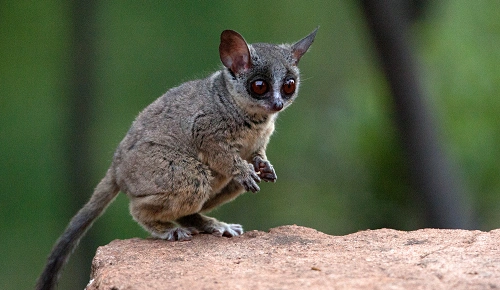
No galagos, also known as bush babies, are not legal to own in California under any circumstance. Even though they are small, wide-eyed primates that many people online treat like playful exotic pets, California classifies them as restricted wildlife the moment they enter the state. This is one of those cases where many new exotic-pet owners get confused, because bush babies look harmless and are often kept legally in a handful of other states. But California does not look at appearance or size. The state focuses entirely on species classification, and galagos fall into one of the most tightly regulated categories: non-human primates. Once an animal sits in that category, ownership in California becomes impossible for regular residents. You cannot buy one, you cannot import one, you cannot breed one, and you cannot keep one even if you raised it from infancy in another state. To California, a bush baby is not a cuddly pet — it is a wild primate, and the law treats it exactly like that.
Why California Classifies Galagos as Banned Wildlife
California’s exotic-animal rules are contained in Title 14, Section 671 of the state regulations. This section lists species that cannot be privately owned, and primates appear clearly on that list. Galagos fall under that broader primate category. Their size does not matter. Their temperament does not matter. Their popularity on the internet does not matter. California does not create exceptions for “small primates” or “cute primates.” If it is a primate and it is not a human, it is prohibited for private ownership. The rule is blunt on purpose, because the state wants to avoid case-by-case debates over which species are safe. Once a species is placed into the restricted group, the ban applies to every individual animal without exception. So a bush baby, even at just a few ounces, is treated the same way the state treats a chimpanzee or macaque.
Why California Does Not Allow Galagos as Pets
California’s reasoning focuses on public health, unpredictable behavior, and environmental safety. Galagos may look adorable, but they remain wild primates with sharp teeth, fast reflexes, and territorial instincts. They can bite suddenly, scratch deeply, and carry diseases that typical house pets do not. The state argues that ordinary households lack the training, medical access, and handling experience needed to care for primates safely. California also fears escapes. A loose galago, even a tiny one, could disrupt local wildlife or spread illnesses to species that have no resistance. Because California has already dealt with ecological problems from escaped exotics, the state has adopted a strict attitude toward all primates.
Can Permits Make a Galago Legal?
This is another area where many people misunderstand the law. California does issue permits for certain restricted animals, but these permits are not for private ownership. They only apply to:
- Universities and scientific research
- Government-approved wildlife facilities
- Film and television production companies
- Accredited educational institutions
These permits do not apply to private pet owners, no matter how responsible they are or how well they can care for the animal. Even a person who has raised galagos for years in another state cannot move to California with them. Importing a galago into California immediately violates wildlife restrictions, and no amount of paperwork from another state will change that.
Why Online Claims About “Mini Primates” Are Wrong
Social media is full of posts claiming bush babies are legal with paperwork, legal if bred in captivity, or legal if considered “non-dangerous.” None of that applies in California. The state does not care whether the animal was born in a licensed breeding facility. It does not care whether the animal has been hand-raised since birth. It does not care whether the owner insists the animal is harmless. California law is based on species classification, not perceived danger. People who try to disguise a galago as a “therapy animal” or “emotional support animal” also run into legal trouble. Primates cannot be service animals or ESA animals under California rules. These claims do not override wildlife bans.
Penalties for Owning a Galago in California
If authorities discover a bush baby in California, the outcome is immediate confiscation. Depending on the situation, the owner can face:
- Misdemeanor charges
- Heavy fines
- Liability for any environmental or health risks
- Investigation by wildlife officials
The animal is usually placed with a permitted wildlife center, but the owner cannot regain it. California does not allow the animal to remain in private hands once it has been identified.
In conclusion, Galagos are not legal in California, and there is no path that makes them legal pets. They are classified as primates, and California bans private ownership of all non-human primates without exception. Permits do not apply to households, out-of-state paperwork has no effect, and no modification or loophole can change the species classification. In California’s view, a bush baby remains a wild primate, and that makes it a prohibited animal from the moment it enters the state.