Yes, red light cameras are legal in California, but they operate under strict rules that determine how cities use them, how tickets must be issued, and what evidence is required. Many drivers believe cameras are banned because some cities removed them after public backlash, while others assume every photo violation is automatically valid. In reality, California still allows red light cameras, but enforcement has major legal complications and one of the biggest changes in decades is about to take effect. A new statewide law will overhaul how tickets are issued, who receives them, and whether photo identification is required. So cameras remain legal in 2026, but how they are used is about to change dramatically.
How Red Light Cameras Work Under Current Law
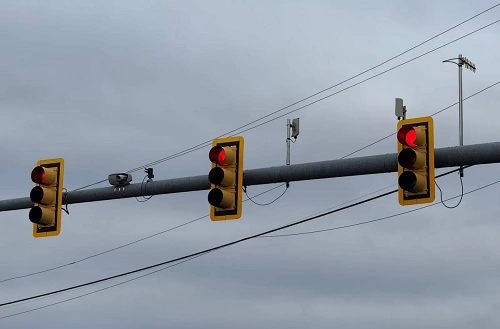
As of 2025, red light camera programs are governed by California Vehicle Code §§ 21455.5–21455.7. Cameras are allowed, but cities must meet strict legal requirements. A valid citation currently requires:
- A clear photo of the vehicle
- A clear photo of the license plate
- A photo that clearly identifies the driver’s face
- Evidence that the vehicle entered the intersection after the light was red
Because the registered owner is not automatically assumed to be the driver, many citations get dismissed when the driver cannot be visually identified. This is why people often beat red light tickets by showing that the photo is blurry or that someone else was driving—a defense that has worked for years.
Critical Update: The Driver Identification Rule Is Changing
California passed SB 720 in late 2025, and it will go into effect statewide in 2026 or 2027, depending on local implementation. This law completely transforms red light camera enforcement:
| Current Law | New Law SB 720 (Effective 2026/2027) |
| Must identify the driver’s face | Driver identification no longer required |
| Treated as a moving violation with DMV points | Becomes a civil violation with no DMV points |
| Insurance rates can be affected | No insurance impact |
| Ticket holds the driver responsible | Ticket holds the registered owner responsible |
| Typical fines $400–$500+ | Flat penalty starting around $100 |
Impact: SB 720 eliminates the biggest defense people use today—arguing “I wasn’t the driver” or pointing out that the photo is unclear. Once the law is active, citations will be issued like parking tickets, and the vehicle owner will be automatically liable.
Warning Signs Are Still Required
Even under SB 720, cities must keep clear signage at intersections or city entry points indicating camera enforcement. If signs are missing or hidden, citations remain contestable. The law does not allow “secret” enforcement stations.
Why Some Cities Removed Cameras
Even though red light cameras are legal, some California cities have shut them down because:
- High maintenance costs
- Too many dismissed tickets due to blurry photos
- Public complaints about “cash-grab traps”
- Short yellow lights increasing violations
SB 720 attempts to make cameras cheaper and harder for drivers to contest. Its goal is to make enforcement uniform statewide and less dependent on the photo’s clarity.
Do You Have to Pay a Red Light Ticket?
- In 2026: Yes, if it is valid and the driver is identifiable. You can contest if the photo fails to show the driver clearly, signage is missing, or paperwork is improper.
- After SB 720 takes effect: Tickets will work more like parking citations. You won’t get DMV points, but ignoring them may lead to added fines or registration blocks.
Conclusion
Red light cameras are legal in California, but enforcement rules are changing. Currently, cities must identify the driver, and vague photos often lead to dismissed tickets. With SB 720, the state will eliminate that requirement, convert violations into civil penalties, set lower fines, and assign liability to the registered vehicle owner rather than the driver. California is not banning red light cameras it is redesigning them to be cheaper to operate and harder to challenge. Anyone driving in California should expect major enforcement changes as these new rules roll out statewide.