Yes, slingshots are legal to own in California, but the law becomes much more complicated when you carry one in public or use certain types of models. Many people assume slingshots are harmless toys, while others mistakenly believe they are banned like switchblades or blowguns. The truth is somewhere in the middle. California doesn’t outlaw ordinary slingshots sold for recreation, survival sports, or backyard target practice. But the moment a slingshot becomes a weapon designed for harmful projectile launch—especially when it’s modified with wrist braces or carried in public—the law starts to treat it as a dangerous device. So while you can buy and own slingshots, using or carrying them without understanding the rules can lead to criminal charges.
California Law and Slingshots: What’s Actually Legal
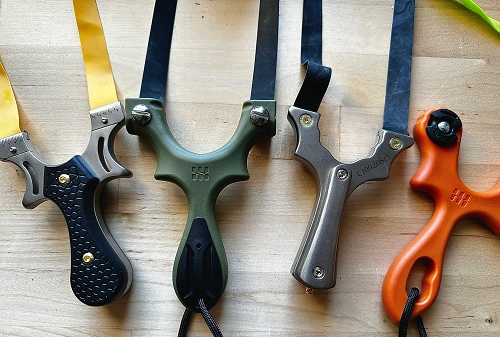
California has no statute that outright bans ownership of basic hand-held slingshots. A traditional Y-shaped frame with elastic bands designed to launch small projectiles is completely legal to purchase, possess at home, or use on private property with permission. Sporting goods stores, camp suppliers, and outdoor retailers sell slingshots legally. California does not classify them as firearms, explosives, or prohibited weapons based solely on their design.
Because of that, adults and minors may legally own a basic slingshot. There is no age limit for purchase or possession under state law, except where retailers choose to impose policies for safety. However, just because you can own one doesn’t mean you can use it anywhere.
When a Slingshot Becomes Illegal: Weapon Use and “Brandishing”
Slingshots become a legal problem when they are used, carried, or displayed as weapons. California Penal Code § 417 prohibits brandishing a deadly weapon in a threatening or rude manner in public. Even though the slingshot itself is legal, using it to intimidate someone or simply exposing it during an argument can lead to criminal charges. The law focuses on behavior, not just the object.
A slingshot that has never harmed anyone can instantly be treated as a weapon the moment someone uses it in a threatening way. Courts have recognized that a slingshot can cause serious bodily injury, making it a “deadly weapon” under assault statutes. If you launch a rock or metal ball at a person, property, or vehicle, you can face charges like assault with a deadly weapon (Penal Code § 245), vandalism, or reckless endangerment—even if nobody is injured. This means the legality hinges on how it’s used, not just what it is.
Wrist-Braced Slingshots: The Grey Zone
Some slingshots include wrist braces or support bands that increase power and accuracy. California does not explicitly ban these devices, but they are sometimes viewed by law enforcement as more dangerous, especially when paired with steel ball ammunition. In some local jurisdictions, wrist-braced slingshots are treated similarly to prohibited weapons because they allow greater projectile force. While there is no statewide ban, anyone carrying such a model in public increases the risk of being cited or having the device confiscated.
Carrying Slingshots in Public
While ownership is legal, carrying a slingshot in public can bring attention from police. California law allows officers to seize objects reasonably suspected to be used as weapons. If an officer believes you’re carrying a slingshot for harmful purposes, or you possess ammunition like ball bearings, you can be detained and investigated under Penal Code § 21310 (carrying concealed daggers or other weapons) or other public safety rules. Although a simple slingshot does not fall under that code, officers often apply broader interpretations when there’s potential danger. For everyday life, openly carrying a slingshot through a park, crowded street, or school zone is a bad decision, even if technically legal.
Hunting and Wildlife Restrictions
Slingshots are legal for sport shooting, but they are not legal to hunt most animals in California. State wildlife laws prohibit using slingshots to take protected species and most mammals. Using a slingshot to hunt birds, squirrels, or other wildlife can lead to poaching charges and loss of hunting privileges. Only limited pest control exceptions exist on private property, and even those require compliance with humane and species-specific regulations. So while you can target cans in your backyard, hunting with slingshots is generally unlawful.
Minors and School Restrictions
Even though minors may legally own slingshots, bringing them to school is illegal. California Education Code treats slingshots as prohibited weapons on school grounds, just like knives or fireworks. Possession at school can lead to expulsion, criminal referral, and loss of juvenile rights. Parents can also face liability depending on the child’s behavior.
Conclusion
Slingshots are legal to own in California, but their legality depends heavily on how they are carried and used. A simple recreational tool can instantly become a “deadly weapon” if used improperly, carried in the wrong place, or brandished during a conflict. Wrist-braced models and hunting use create additional risks. The safest approach is clear: enjoy slingshots on private property, avoid carrying them in public, and never use them against people, animals, or property. In California, the slingshot itself isn’t the problem—how you use it determines whether it stays legal.