No, Everclear is effectively not legal for normal retail sale in California in the way most people think of it. The key issue is not just the famous 190-proof bottle — it’s the state’s broader limit on how strong any drinkable alcohol can be when sold by a retail licensee like a liquor store, grocery store, or typical bottle shop. California law caps the maximum strength of undenatured, drinkable alcohol at 60% alcohol by volume (120 proof) for retail sale. Anything stronger than that, if it’s fit for beverage purposes, cannot be sold by a normal off-sale license holder. That means both 190-proof Everclear and the 151-proof Everclear are over the legal limit and therefore not permitted on regular store shelves. So in practice, the high-proof Everclear people know from other states is not a legal retail product in California.
What California Law Actually Says About High-Proof Alcohol
California’s rules come from the Business and Professions Code, as enforced by the Department of Alcoholic Beverage Control (ABC). The crucial point is how the state treats undenatured alcohol that is still considered an “alcoholic beverage” — meaning it’s drinkable or reasonably capable of being consumed.
Under the strict reading of B&P Code § 23403, a retail licensee (like a liquor store or supermarket) is prohibited from selling or possessing for beverage sale any undenatured alcoholic beverage that contains more than 60% alcohol by volume (120 proof). In plain language:
- If the spirit is over 60% ABVand is fit to drink, it cannot be sold at retail in California as an alcoholic beverage.
That means:
- 151-proof Everclear (75.5% ABV)is above the 60% ABV limit and therefore not allowed for normal retail beverage sale.
- 190-proof Everclear (95% ABV)is also banned, and even more clearly so.
So while some people think “190 is banned but 151 is fine,” the statutory cap of 60% ABV means both are beyond the legal retail threshold when sold as drinkable liquor.
Does That Mean Everclear Is Completely Illegal?
For typical consumers, practically yes — you will not find the classic 151 or 190 versions sold legally on standard retail shelves as a beverage in California. However, there are a few narrow caveats:
- Certain licenses and permits for industrial, laboratory, or non-beverage usesmay allow possession of very high-proof undenatured alcohol under strict conditions.
- Some institutions may obtain high-proof spirits under non-beverage or specialized permits (for extraction, lab work, manufacturing, etc.).
But those are not “go buy a bottle at the store and make punch” situations. For ordinary consumers using standard off-sale outlets, Everclear at 151 or 190 is not a legal retail product.
Why California Is So Strict on High-Proof Spirits
California’s proof limit is driven by safety and public-health concerns. Very high-proof spirits:
- Can cause alcohol poisoningextremely quickly.
- Are highly flammable, raising fire and burn risks.
- Are often used in dangerous drinking games or poorly controlled cocktails.
By cutting off retail access above 60% ABV, lawmakers are trying to reduce the risk of severe overdoses and accidents. The idea is that if a product is strong enough to be closer to industrial alcohol than to ordinary liquor, it should not be widely available as a drink.
Can You Order Everclear Online or Bring It from Another State?
Legally, you are not supposed to import banned high-proof beverage alcohol into California for retail or personal beverage use when it violates the state’s ABV limit. Even if:
- It is legal where you bought it, and
- A website is willing to ship it
California law still applies once the bottle is in this state. Common carriers and licensed shippers are also subject to ABC rules. While small personal possession enforcement may be rare, the law itself does not create a “personal import” loophole that magically makes 151 or 190 proof a legal drink here.
What About Lower-Proof “Everclear-Style” Products?
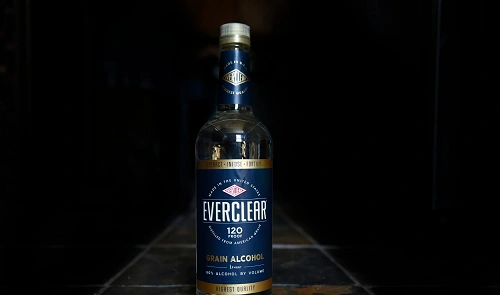
Some brands or products marketed as neutral grain spirits may be bottled at or below 60% ABV (120 proof) to comply with California’s limit. These can sometimes be sold legally if they stay within that cap and otherwise comply with ABC rules. But the classic Everclear strengths (151 and 190) that people associate with high-proof punch, tinctures, and extractions are above the legal threshold and therefore off the normal retail market.
Conclusion
In California, Everclear in its classic high-proof forms is not legal for normal retail beverage sale. State law prohibits retail licensees from selling undenatured alcoholic beverages stronger than 60% ABV, which knocks out both the 151-proof and 190-proof versions. While specialized non-beverage or industrial channels may handle very high-proof alcohol under strict regulation, regular consumers cannot lawfully buy the traditional strong Everclear off the shelf in California. If you are in this state and thinking about using Everclear the way people do elsewhere, you should assume that the classic high-proof bottles are not legally available here.