Yes, jaywalking is legal in California under specific conditions. The state changed its approach to pedestrian violations with a recent law called the Freedom to Walk Act, which took effect in 2023 and continues in 2026. This law does not say pedestrians can cross anywhere with no rules. Instead, it decriminalizes most jaywalking tickets unless a pedestrian crosses in a way that creates an immediate danger of being hit. In simple terms, crossing outside a crosswalk is allowed as long as it’s safe. Police can no longer stop or cite someone just because they crossed mid-block or against a signal when no cars are near enough to cause harm. Jaywalking didn’t disappear—only unnecessary enforcement did.
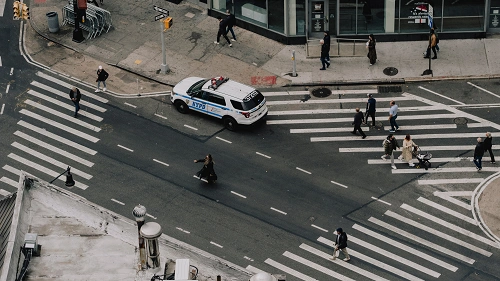
How the Freedom to Walk Act Changed the Law
Before this law, jaywalking was heavily enforced in some areas even when pedestrians crossed safely. California lawmakers argued that enforcement was inconsistent, often affected lower-income communities disproportionately, and did not clearly improve road safety. The Freedom to Walk Act shifted the focus away from punishment for minor pedestrian rule violations. Instead of treating every mid-block crossing as illegal, the law now requires police to prove that a crossing was genuinely unsafe. So walking across the street outside a crosswalk is no longer automatically a ticketable offense.
When Crossing Is Still Legal
Pedestrians may now legally cross the street outside of marked crosswalks or crosswalk signals if they do so with reasonable safety. That means judging the speed and distance of cars and choosing a moment when no vehicle poses an immediate hazard. If there are no approaching cars that would need to slow down or stop, the crossing is legal. In a quiet street, a residential neighborhood, or a wide parking area with no moving vehicles nearby, walking across the road is allowed.
When Jaywalking Is Still Illegal
Jaywalking is not a free-for-all in California. It remains illegal to cross if doing so creates a danger. The law still allows police to issue a ticket when a pedestrian walks into traffic with a risk of being hit, forces drivers to brake suddenly, or crosses without checking whether vehicles are approaching. A person who steps directly into a moving lane, crosses through heavy traffic without a signal, or ignores a speeding vehicle close by still violates the law. The standard is simple: if an ordinary, careful person would consider the crossing unsafe, it’s still illegal.
What Drivers Still Must Do
Legalized jaywalking does not mean drivers have been relieved of responsibility. Motorists are still required to yield to pedestrians in the road, even outside crosswalks, when a pedestrian has begun crossing safely. Drivers who fail to slow or stop for someone already in the road can be cited. So while pedestrians must cross responsibly, drivers must still watch for them and avoid collisions. Both sides are expected to behave reasonably under the law.
Safety and Liability After an Accident
Even though jaywalking can be legal, it does not automatically protect pedestrians from fault if they are injured. If a pedestrian crosses unsafely and is hit, they may still be found partly responsible under California’s comparative negligence rules. Likewise, if a driver hits someone who is crossing legally or could have slowed down, the driver may share or bear full liability. The Freedom to Walk Act did not change civil traffic liability—it only changed how police issue citations.
Why California Changed the Rule
Lawmakers argued that ticketing harmless crossing behavior did little to improve safety and disproportionately affected people who walk in communities lacking crosswalks or sidewalks. The purpose of the new law is to shift focus toward dangerous behavior—not punish everyday walking. By removing penalties for safe crossing, the state tries to balance pedestrian freedom with personal responsibility and roadway caution.
Conclusion
In California, jaywalking is legal as long as the pedestrian crosses safely and does not create an immediate hazard. Police can still issue citations when someone crosses recklessly, but they can no longer ticket merely for being outside a crosswalk. Drivers must continue to yield when people are already in the road, and pedestrians must continue to judge traffic before stepping off the curb. Jaywalking didn’t vanish—it was redefined. California now treats crossing the street as a shared responsibility rather than an automatic offense.