Car underglow lights often seen as glowing rings beneath a vehicle—have become popular among car enthusiasts who want a customized nighttime look. In California, these lights are not entirely illegal, but strict rules govern when and how they can be used. Many drivers mistakenly believe all underglow is banned, while others assume any color is fine if the lights are not flashing. The truth lies in the middle. California allows underglow only if it does not mimic emergency lighting, distract other drivers, or violate specific color and brightness restrictions. So underglow is legal in limited form, but misuse can easily lead to tickets.
California’s Rules on Color and Visibility
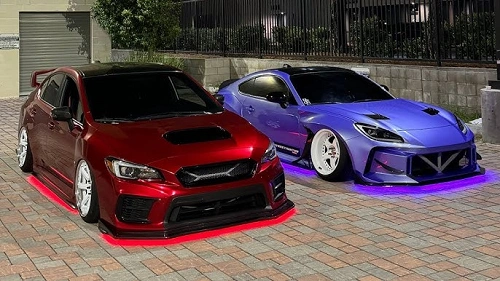
The most important rule is that no lighting visible from the front of the vehicle may be red, and no lighting may be blue if visible on public roads. Blue lighting is reserved for emergency vehicles, and red front-facing lights create confusion with brake or rear signal lights. If underglow is visible while driving and displays these restricted colors, it is illegal. California also requires vehicle lighting to remain non-flashing or non-rotating unless it is a turn signal or hazard light. Any underglow that mimics an emergency strobe pattern or pulse effect is unlawful while the car is on the road.
Placement and Brightness Restrictions
The law does not forbid lighting underneath a vehicle. Instead, it restricts how much of it the public can see. Underglow must not emit bright or direct light that shines outward, distracting other drivers. The glow should remain subtle and hidden beneath the car, not projecting onto the roadway or other vehicles. If the light bulbs themselves are visible, police may interpret the setup as a violation. Cars with overly exposed LED strips or bright beams are more likely to be cited for unsafe modification.
Legal Colors and Practical Use
California’s safest legal choices for underglow are softer tones such as white, amber, or soft pink—essentially colors that do not resemble police, ambulance, or fire lighting. Even then, the lights should be used responsibly and kept dim enough to remain decorative rather than attention-grabbing. Drivers may use any color legally when parked on private property, including red, blue, green, or multicolor displays, as long as the car is not on a public road. Car events, meet-ups, and showrooms can display any underglow without violating traffic laws, because the restriction applies to vehicles being operated on California streets.
When Underglow Becomes Illegal
Underglow becomes illegal when it is used while driving on public roads in a way that violates color restrictions, imitates emergency lighting, or causes distraction. The violation may result in a fix-it ticket requiring removal or adjustment. Repeated offenses can lead to fines, especially if officers believe the lights interfere with road safety. Some cities may also enforce local ordinances that go beyond state rules, so drivers should check local policies when customizing.
Conclusion
Underglow is legal in California, but only as long as it follows the state’s strict limits on color, brightness, visibility, and use while driving. Red or blue lighting visible on the roadway is prohibited, and lights may not flash like emergency vehicles. Decorative glow is allowed only when subtle and not distracting. Drivers who want stylish lighting without legal trouble should choose safe colors, hide the light source, and reserve bold effects for private property or car shows. With the right setup, underglow can be both street-legal and eye-catching.