In California, earthquakes aren’t rare surprises. They’re part of everyday life. People keep emergency kits in closets. Buildings are designed to sway. Children practice “drop, cover, and hold on” drills in school. Even small tremors make headlines.
To outsiders, it feels unsettling. Why does the ground move so often here? Why does California seem to shake more than almost anywhere else in the country?
The answer lies deep beneath your feet, California sits on one of the most geologically active regions on Earth — a place where massive slabs of the planet’s crust grind past each other day and night. These slow, invisible movements build pressure over years or decades. When that pressure finally releases, the ground snaps, and an earthquake is born.
It’s not bad luck. It’s geography, physics, and time.
Let’s understand what makes California such a hotspot for earthquakes.
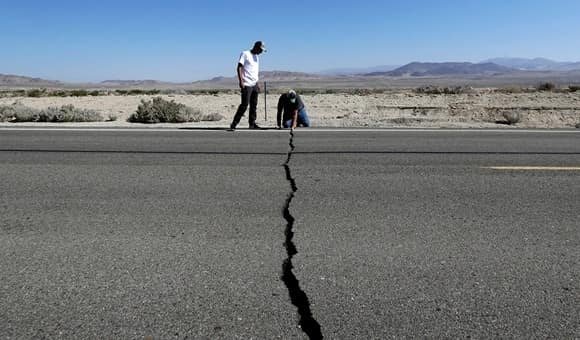
California Sits on a Major Plate Boundary
The biggest reason is simple: California lies directly on the boundary between two enormous tectonic plates — the Pacific Plate and the North American Plate.
These plates are constantly moving.
The Pacific Plate slides northwest, while the North American Plate pushes southeast. They don’t move smoothly. They catch. They lock. Stress builds up. Then suddenly, they slip.
That slipping is what causes earthquakes.
The most famous fault marking this boundary is the San Andreas Fault, which runs roughly 800 miles through the state. But it’s only one piece of a much larger network of faults crisscrossing California.
California Has Hundreds of Active Faults
People often focus on the San Andreas, but California actually has hundreds of active faults.
Some are massive and well-known. Others are hidden underground or run beneath cities. These faults break up the stress from plate movement across many locations, which is why California experiences frequent small earthquakes and occasional large ones.
Instead of one giant quake every century, California gets constant minor shaking — pressure releasing in bits and pieces.
That’s why residents may feel several small quakes a year while major disasters happen less often.
The Plates Move Sideways, Not Head-On
California’s earthquakes are mostly caused by strike-slip faults, where plates slide sideways past each other.
This matters.
When plates collide directly, they tend to form mountains or volcanoes. When they slide sideways, they create long fault lines and repeated earthquakes.
California’s sideways motion keeps the land fractured and restless.
Los Angeles, for example, is slowly moving north toward San Francisco at about two inches per year. That may sound tiny, but over millions of years it reshapes continents.
Pressure Builds Quietly for Years
Earthquakes don’t happen randomly.
Stress accumulates along faults over long periods. Rocks bend slightly under pressure until they reach a breaking point. When they finally snap back into place, energy ripples through the ground as seismic waves.
That’s the shaking you feel.
Big earthquakes usually follow decades or centuries of quiet buildup. Smaller quakes happen more often as minor adjustments release some of that stress.
California’s Landscape Is Still Being Formed
California is geologically young.
Its mountains, valleys, and coastline are still evolving. The Sierra Nevada continues to rise. Coastal cliffs keep shifting. Basins deepen. This ongoing reshaping of the land keeps fault systems active.
In other parts of the U.S., tectonic forces are weaker or long dormant. In California, they’re very much alive.
Humans Don’t Cause Most Quakes — But They Can Trigger Small Ones
Most California earthquakes are natural.
However, human activities like deep wastewater injection, geothermal energy production, or reservoir filling can sometimes trigger small quakes by altering underground pressures. These are usually minor compared to tectonic earthquakes and don’t drive California’s overall seismic risk.
The real cause remains plate motion.
The Bottom Line
California has so many earthquakes because it sits directly on a major tectonic boundary where massive plates slide past each other every day. Hundreds of active faults spread that stress across the state, producing frequent shaking and occasional powerful quakes.
Earthquakes here aren’t anomalies.
They’re part of the natural process of a living, shifting planet.
California exists in motion — slowly drifting, grinding, and reshaping itself — and the earthquakes are simply how the Earth reminds us of that fact.