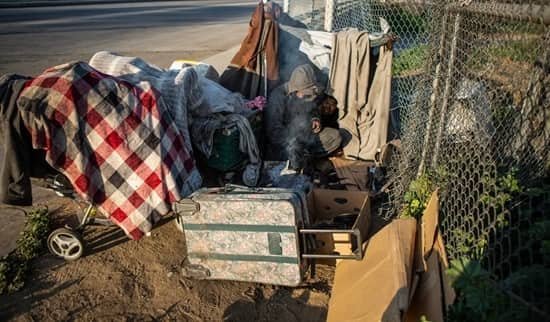
Walk through parts of Los Angeles or San Francisco and the reality is impossible to ignore, tents under freeway overpasses, people sleeping in doorways, entire blocks struggling with visible poverty.
For many Californians, it feels overwhelming. For visitors, it’s shocking. And for those living it, it’s survival.
So why does California, a state with immense wealth and innovation, also have the largest homeless population in America?
The answer isn’t one simple failure. It’s a convergence of sky-high housing costs, decades of underbuilding, mental health and addiction gaps, mild weather, economic inequality, and policies that often respond too slowly to human need.
This didn’t happen overnight. It’s the result of structural problems piling up for years.
Let’s break it down.
Housing Costs Are the Core Driver
Everything starts with housing.
California has some of the most expensive rents and home prices in the country. In many cities, even a basic studio apartment can eat up more than half of a full-time paycheck.
When rent rises faster than wages, people fall behind.
A medical bill. A lost job. A divorce. One missed paycheck.
For thousands of Californians, that’s all it takes to slide from housed to unhoused.
Research consistently shows that homelessness rises where housing is scarce and expensive — and California has both.
This is the single biggest reason the numbers are so high.
California Hasn’t Built Enough Homes for Decades
The state simply didn’t build enough housing to match population and job growth.
Strict zoning laws, neighborhood opposition, environmental reviews, and high construction costs slowed development for years. Huge portions of urban land allow only single-family homes, limiting density.
The result: a chronic shortage.
When supply stays tight and demand stays strong, prices explode — and low-income renters are pushed out first.
Homelessness is the extreme end of that housing shortage.
Mental Health and Addiction Systems Are Overwhelmed
Many unhoused people struggle with mental illness, substance use, or both.
California once had large psychiatric institutions, but most were closed decades ago during nationwide deinstitutionalization — without building enough community-based care to replace them.
Today, treatment options are fragmented and hard to access. Emergency rooms become default mental health centers. Jails become holding spaces. Long-term care is scarce.
Without stable housing and consistent treatment, people cycle between the streets, hospitals, and shelters.
It’s not compassion failing.
It’s infrastructure.
Mild Weather Makes Outdoor Survival Easier
This factor is uncomfortable to talk about, but it matters.
California’s climate allows people to survive outdoors year-round in many regions. Unlike colder states, where winter forces emergency shelter use, California’s weather makes long-term street living physically possible.
That doesn’t cause homelessness — but it concentrates it.
People who become homeless in colder states often migrate west. Some arrive already unhoused. Others fall into homelessness after moving.
California becomes the destination by default.
Income Inequality Is Extreme
California holds enormous wealth — and enormous poverty — side by side.
Tech and entertainment industries create high-paying jobs, but service workers, caregivers, retail staff, and laborers often earn far less while facing the same housing market.
When inequality grows inside a tight housing system, more people end up on the edge.
Some fall off.
Temporary Help Is Easier Than Permanent Housing
Cities often rely on short-term solutions: shelters, hotel vouchers, emergency outreach.
These help people survive.
But they don’t solve homelessness.
Permanent supportive housing — homes paired with mental health and social services — works. It’s proven. But it’s slow to build, expensive, and frequently blocked by local opposition.
So governments keep managing the crisis instead of ending it.
The System Is Fragmented
Responsibility is split across cities, counties, the state, nonprofits, and federal agencies.
Funding streams don’t align. Data systems don’t talk to each other. Programs overlap or leave gaps.
Someone might get food assistance but no housing. Medical care but no caseworker. Shelter but no long-term plan.
People fall through cracks that shouldn’t exist.
Homelessness Is More Visible Here
California also counts more carefully and reports more openly than many states.
Some places hide homelessness in jails, institutions, or temporary housing. California’s unhoused population is more visible on streets and sidewalks, especially in dense urban areas.
That visibility shapes perception — but it also reflects a real crisis.
The Bottom Line
California has so many homeless people because housing is unaffordable, supply is limited, mental health systems are strained, inequality is high, the climate allows outdoor survival, and long-term solutions lag behind immediate need.
This isn’t about laziness.
It’s about structural failure.
Homelessness in California is a housing problem first, a healthcare problem second, and a policy problem always.
Until the state builds far more affordable homes, expands mental health care, and coordinates services better, the crisis will continue — no matter how much money is spent on temporary fixes.