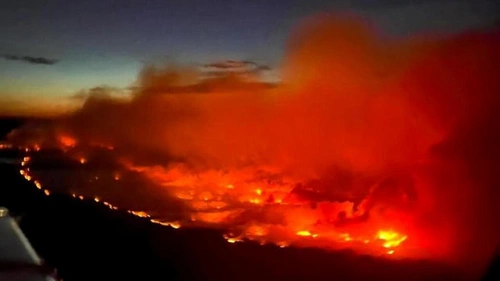
Every year, it seems to happen again. Skies turn orange. Neighborhoods evacuate. News helicopters circle towering walls of smoke. For millions of Californians, wildfire season has become a grim routine rather than a rare disaster.
To outsiders, it looks baffling. How can one state burn so often? Why does California dominate national wildfire headlines while many other places don’t?
The answer isn’t simple — and it isn’t just “hot weather.” California’s wildfire problem is the result of climate change, natural geography, decades of land management decisions, growing human development, and powerful seasonal winds. Each factor alone matters. Together, they create one of the most fire-prone environments on Earth.
Let’s break it down.
California Has the Perfect Natural Setup for Fire
California’s landscape is built to burn.
Large parts of the state are covered in chaparral, grasslands, and dry forests — vegetation that naturally ignites easily. Many native plants even evolved to depend on fire for regeneration.
Add long dry summers, minimal rainfall between May and October, and steep mountain terrain, and you get ideal conditions for fast-moving wildfires.
Fire has always been part of California’s ecosystem. What’s changed is how intense and destructive those fires have become.
Climate Change Is Making Everything Worse
Rising temperatures are a major driver.
California is now hotter and drier than it was decades ago. Snowpacks melt earlier. Soils dry out faster. Vegetation becomes tinder by late summer.
This means fire season lasts longer and burns hotter.
Scientists consistently show that climate change has dramatically increased the amount of dry fuel available for wildfires in the western United States. Fires today spread faster, jump farther, and are harder to control than in the past.
In short: warmer air pulls moisture from plants and soil, turning forests into matchsticks.
Decades of Fire Suppression Backfired
For most of the 20th century, U.S. policy focused on putting out every wildfire as quickly as possible. The goal was protection. The result was unintended buildup.
Small natural fires that once cleared brush were eliminated. Dead trees and dry undergrowth accumulated year after year. Forests became overcrowded.
Now, when fires start, they don’t creep along the ground. They explode into massive blazes fueled by decades of neglected debris.
Modern wildfires aren’t just burning forests — they’re burning fuel that never should have piled up in the first place.
More People Are Living in Fire Zones
California’s population keeps expanding into wildfire-prone areas.
Homes now sit deep in forests, hills, and canyons — places known as the wildland-urban interface. These communities place people directly in the path of natural fire corridors.
Human activity also increases ignition. Power lines fail. Campfires escape. Vehicles spark dry grass. Most wildfires in California today are started by people, not lightning.
More people in risky areas means more fire starts — and more lives and property at stake.
Powerful Winds Turn Small Fires Into Disasters
California has seasonal wind systems that act like giant blowtorches.
In Northern California, Diablo winds roar through valleys. In Southern California, Santa Ana winds push hot, dry air from inland deserts toward the coast.
These winds can turn a small spark into a raging inferno within minutes, carrying embers miles ahead of flames and overwhelming firefighting efforts.
When wind aligns with dry fuel, fires become nearly unstoppable.
Aging Infrastructure Adds Risk
Much of California’s electrical grid was built decades ago. During high winds, aging power lines can spark fires — a factor in several catastrophic blazes.
Utilities now shut off power during extreme conditions, but this comes with its own risks and disruptions. The system remains vulnerable, especially in rural and mountainous regions.
The Bottom Line
California has so many wildfires because it combines fire-adapted landscapes, hotter and drier climate conditions, decades of fuel buildup, expanding development into risky areas, and fierce seasonal winds.
None of these alone would create today’s crisis.
Together, they do.
Wildfires aren’t new to California. What’s new is their scale, speed, and destruction. Until land management improves, infrastructure modernizes, and climate pressures ease, fire will remain an unavoidable part of life in the Golden State.