No, 20% window tint is not legal on the front side windows of a vehicle in California, even though many drivers believe they can use any darkness as long as they can see out of it. California’s tint laws are strict and specifically limit how dark the front windows can be, regardless of how common darker tints may appear on the road. The only vehicles that can legally use 20% tint on their front side windows are those with a certified medical exemption. Without that exemption, using 20% tint can result in fix-it tickets, fines, or repeated citations if not removed. So in 2026, 20% tint is only legal in certain places on a car—not everywhere.
Understanding California’s Tint Limits
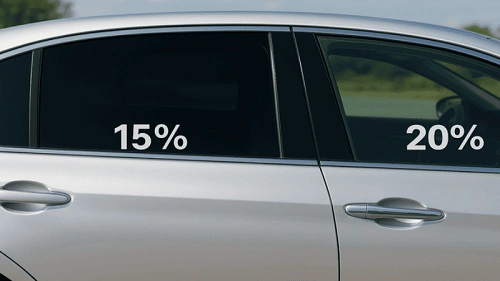
California Vehicle Code § 26708 sets precise limits on how much light must pass through a window. Tint is measured by Visible Light Transmission (VLT), meaning the percentage of light allowed to shine through.
Here is how the law applies to 20% tint:
- Front side windowsmust allow at least 70% of light to pass through.
- 20% is far below 70%, making it illegalon the driver and passenger front windows.
- The windshieldalso cannot be tinted dark, except for a narrow strip at the top (the tint “sun visor” area).
Because 20% does not meet the 70% requirement, police can legally ticket it even if the glass appears light during the day or semi-transparent at night.
Where 20% Tint Is Legal
While 20% tint is illegal on the front side windows, California does allow it in certain places:
- Rear side windows(back passenger doors)
- Rear windshield (back window)
There is no minimum VLT limit on rear windows for most passenger vehicles, meaning 20%, 5%, or even blackout tint can be legal as long as:
- The car has dual side mirrorsproviding a clear rear view.
Without two side mirrors, darker rear tint may still be illegal. So the tint and mirror rules work together.
Medical Exemption Rules
20% on the front windows can only be legal with a medical tint exemption, but even then, California allows clear or nearly clear films only. The law does not permit dark, reflective, or limo-style tint even with a prescription.
A valid exemption requires:
- A licensed physician’s letter
- Documentation kept in the vehicle
- Tint that does not block more than necessary for the condition
This means that in most cases 20% is still not allowed even with a medical exemption because California insists on “colorless, transparent” UV-protective film for medical purposes.
Will Police Actually Stop You?
California officers regularly issue tint tickets, especially in:
- Highway Patrol stops (CHP patrols)
- Urban areas with strict enforcement
- DUI checkpoints
- Night-time traffic stops where dark tint raises officer safety concerns
First citations are often “fix-it tickets,” requiring removal of the tint. Repeat violations, however, can turn into larger fines.
Why California Restricts Dark Tint
The restrictions are based on safety concerns. Officers need to see inside the front of the vehicle during traffic stops, and dark tint hampers visibility. Additionally, research links overly dark front windows to reduced visibility during night driving, increasing collision risks.
Conclusion
In California, 20% tint is legal only on the rear side windows and back windshield, as long as the vehicle has dual mirrors. It is illegal on the front side windows and windshield, regardless of how common it may look on the road. Medical exemptions do not generally authorize dark front tint, making 20% legal only at the rear of the vehicle. Anyone thinking about darkening their windows should follow the 70% rule for the front to avoid tickets—and keep the 20% tint where the law allows it.