Yes, but with important caveats. SharkBite push-to-connect fittings are generally legal in California for many plumbing applications, including potable water lines, when they meet appropriate standards and are installed in compliance with local building and plumbing codes. However, “legal” does not mean “universal” or “automatic”; whether a particular SharkBite fitting is acceptable in a specific installation often depends on the model, the pipe type, the local jurisdiction, and whether the installation has been approved under the California Plumbing Code (CPC). So yes, SharkBite fittings can be legal—but you must check product certification, local code adoption, and correct installation practices.
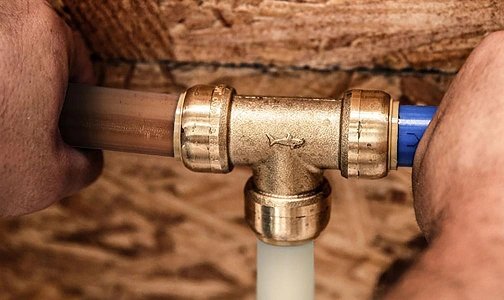
On What Basis SharkBite is Allowed
SharkBite fittings carry certifications by recognized testing agencies and are approved for use under national model plumbing codes. The manufacturer states the fittings comply with standards such as NSF/ANSI 61 for potable water, NSF/ANSI 372 for low-lead content, ASSE 1061 for push-fit fittings, and they meet the Uniform Plumbing Code (UPC) and International Plumbing Code (IPC) requirements. The California Plumbing Code (which is part of Title 24, California Code of Regulations) adopts or references model codes and allows fittings that meet recognized standards, unless a local jurisdiction amends those provisions. Because SharkBite fittings align with those standards, many plumbers, contractors, and manufacturers treat them as code-compliant materials for many residential and commercial repairs.
Where Issues Arise in California
Even though SharkBite fittings are broadly approved, there remain grey areas and local restrictions in California. One widely-cited article notes that while a product may be listed as “approved” for use in California by the manufacturer, local jurisdictions (for example Los Angeles) may issue internal directives or interpretations that limit their use in certain settings — such as behind walls, underground, or in commercial/industrial occupancies. In some older discussions, homeowners cited notices on packaging saying “Note: It is illegal to sell this product in California and Vermont” because earlier versions did not meet state-specific “lead-free” requirements or other local specs. In short: legality depends not just on the brand but on product version, local code, installation oversight, and testing documentation.
Best Practices for California Installations
If you plan to use SharkBite fittings in California, here are factors you should check to ensure legal compliance:
- Make sure the particular model is certified for potable water and meets California’s “lead-free” requirements (e.g., ≤0.25% lead by wetted surface) and relevant standards credentialed by recognized labs.
- Verify that your local building department or plumbing inspector accepts the push-to-connect product in the relevant occupancy type (residential vs commercial, concealed vs exposed, underground vs interior). Some jurisdictions impose additional restrictions or require special registration.
- Ensure the installation follows the manufacturer’s instructions (proper pipe insertion, deburring, use of correct pipe type—copper, PEX, CPVC, etc.). Manufacturer literature confirms that SharkBite is approved for behind-the-wall and underground use when correctly installed.
- Confirm that your project either meets the State plumbing code as adopted (California Plumbing Code) or is permitted by your local jurisdiction’s amendments. The state code allows materials approved by agencies, but local jurisdictions can adopt more restrictive amendments.
- Retain documentation of product certification, installation instructions, and inspection sign-off if required. If challenged later, lack of documentation may lead the fitting to be declared non-compliant.
When Using SharkBite May Be Risky or Not Legal
Even if the product is certified, you should be aware of situations where local rules or building conditions may make SharkBite fittings non-compliant:
- In a commercial or high-pressure system where the local code mandates welded, soldered or mechanically pressed connections explicitly.
- In public-works contracts or government-mandated projects where the specification expressly bans push-to-connect fittings.
- If the specific fitting is older, labeled for “repair only” or “temporary use”—some jurisdictions may interpret that as not suitable for permanent installations.
- If the installation fails to meet model code installation requirements or lacks local inspection/approval — after that, building officials may order replacement with proven code-compliant method.
Because of these factors, contractors in California often approach SharkBite with caution: they may use it in residential remodels, but verify acceptance before relying on it for new commercial construction or code-inspected jobs.
Conclusion
SharkBite fittings are legal in California, provided they meet certification standards, are accepted by the local jurisdiction’s plumbing code, and are installed correctly. They are not categorically banned, and many installations use them successfully. However, legality is not automatic and varies by local building department and project type. If you’re a homeowner or contractor in California using SharkBite fittings, you should review local code requirements, confirm the exact model of fitting is certified for the application, and ensure the installation follows both manufacturer and local guidelines. In practice, SharkBite can be a code-compliant and efficient solution—but only when you verify it fits your specific jurisdiction and project.