Visual content has become an essential part of the digital world. From websites and social media posts to advertisements, presentations, and online stores, people increasingly rely on images to communicate ideas quickly. However, creating high-quality visuals traditionally required graphic design skills, expensive software, stock photography, or professional designers.
Artificial intelligence is changing that process. AI image generators can now transform written descriptions into original visuals within seconds, making image creation more accessible to individuals, businesses, educators, and content creators.
What Is an AI Image Generator?
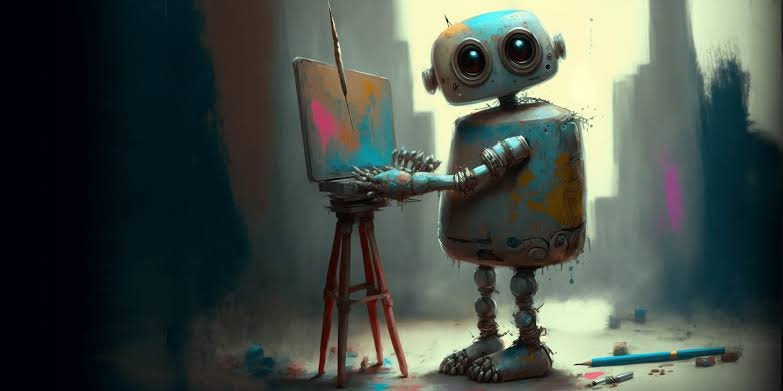
An AI image generator is a technology that uses artificial intelligence models to create images based on text instructions, commonly known as prompts. A user can describe an object, environment, character, concept, or visual style, and the system attempts to produce an image that matches the description.
For example, someone could request an image of a modern office surrounded by plants, a futuristic city at sunset, or a product displayed against a minimalist background. Instead of manually designing the scene, the user can provide a description and let the AI handle much of the visual creation process.
Modern systems can also offer options for different styles, compositions, lighting conditions, and levels of realism. This flexibility has made generative image technology increasingly useful across different industries.
Why AI Image Generation Is Becoming Popular
One of the biggest advantages of AI-generated imagery is speed. Creating a customized visual from scratch can take considerable time, particularly when several revisions are required. AI tools can produce an initial concept almost immediately, allowing users to experiment with different ideas.
Cost is another factor. Small businesses, independent creators, students, and bloggers may not have the budget to hire a designer for every image they need. A free AI image generator can provide an accessible starting point for people who want to explore visual creation without investing heavily in professional software.
AI tools are also useful for brainstorming. Even when a generated image is not used as the final design, it can help a creative team visualize an idea and decide what direction to pursue.
Applications Across Different Industries
AI image generation is not limited to social media or entertainment. Its potential applications extend across many professional fields.
Marketing and Advertising
Marketing teams regularly need fresh visual material for campaigns. AI can help create concept images for advertisements, promotional graphics, campaign ideas, and social media content.
Instead of relying exclusively on generic stock photography, marketers can describe a particular setting or visual concept and generate something tailored to their campaign.
E-Commerce
Online retailers need attractive product presentations to capture customers’ attention. AI-assisted image creation can help businesses develop background scenes, lifestyle concepts, and promotional visuals.
For example, a furniture retailer could visualize a sofa inside several different room styles without physically photographing the product in every environment.
Education
Teachers and educational content creators can use AI-generated images to make learning materials more engaging. Historical scenes, scientific concepts, diagrams, and imaginative examples can be represented visually to complement written explanations.
This can be particularly useful when an appropriate existing image is difficult to find or when copyright restrictions make stock imagery unsuitable.
Content Creation
Bloggers, publishers, and social media creators constantly need new visual material. AI can help them develop illustrations that match the subject and tone of an article instead of repeatedly using unrelated stock images.
Creators can also experiment with different visual styles to establish a more recognizable identity across their content.
The Importance of Good Prompts
The quality of an AI-generated image often depends heavily on the instructions provided to the system. A short and vague prompt may produce an unpredictable result, while a well-structured description can give the model more useful information.
A detailed prompt might specify the subject, environment, lighting, perspective, composition, color palette, and desired artistic style.
For example, instead of writing:
“A city at night.”
A more descriptive prompt could explain that the desired image should show a modern city street at night, illuminated by storefronts and reflections after rainfall, photographed from a street-level perspective.
The second description gives the AI considerably more context. Learning how to communicate visual ideas clearly is therefore becoming an important skill for people working with generative AI.
AI Does Not Replace Human Creativity
Despite rapid technological progress, AI image generation does not eliminate the need for human creativity. The technology can produce an image, but deciding what should be created, why it is needed, and how it should communicate a particular message still requires human judgment.
Designers can use AI as an assistant during the creative process. It can help generate rough concepts, explore alternatives, or overcome the blank-page problem. Human professionals can then refine the selected concept, correct visual problems, and make sure the final result meets the project’s requirements.
This combination of human direction and machine assistance can make the creative workflow more efficient without removing the creative role of people.
Challenges and Limitations
AI image generators also have limitations. Generated images may contain inaccurate details, especially when prompts involve complicated scenes, small objects, or precise text. Although image models continue to improve, users should still review generated material carefully before publishing it.
Copyright and ownership are additional considerations. Different platforms have different terms regarding generated content, commercial use, and intellectual property. Businesses should understand the licensing conditions of the specific AI service they use.
There are also ethical concerns surrounding synthetic media. AI-generated visuals can potentially be used to create misleading or deceptive content. Responsible users should clearly consider context, authenticity, and the potential consequences of publishing realistic synthetic images.
The Future of AI-Powered Visual Creation
AI image generation is likely to become increasingly integrated into everyday creative software. Rather than being a completely separate process, image generation may become another feature within design, publishing, marketing, video editing, and productivity tools.
Future systems are also expected to provide greater control over composition, consistency, editing, and personalization. Users may be able to generate an image and then make precise changes through simple instructions rather than starting over.
Technology such as the GPT Image 2.5 AI image generator represents the broader movement toward more capable AI-assisted visual creation, where natural-language instructions can become an important interface for producing and modifying digital imagery.
A New Creative Workflow
The rise of AI image generators does not simply mean that images can be created faster. It changes how people approach visual communication.
A designer can explore several concepts before committing to one. A small business can test different campaign ideas without producing a complete photo shoot for every variation. A writer can develop custom illustrations that closely match an article’s subject.
Used thoughtfully, AI can reduce repetitive work while giving people more time to focus on strategy, storytelling, and creative decisions.
The most valuable approach is therefore not to view AI as a replacement for creativity, but as another tool within the creative toolkit. As the technology develops, people who learn how to combine effective prompting, critical evaluation, and human creativity will be better positioned to make useful and responsible digital content.