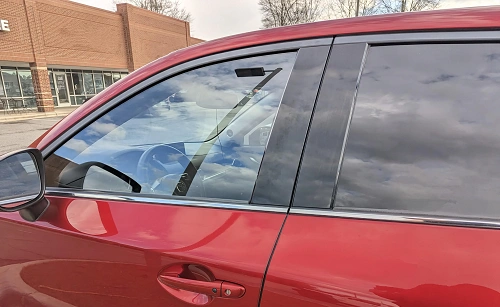
Yes, 35% tint is legal on some parts of a vehicle in California, but not on the front windows. California’s window-tint laws are stricter than most states, and the legality depends entirely on where the tint is installed. A 35% visible light transmission (VLT) rating means the tint lets 35% of outside light pass through. That number is too dark for the front driver and passenger windows, which must meet a much higher brightness standard. However, 35% is fully legal for the rear passenger windows and the back windshield, as long as your vehicle has the proper mirrors. So, while 35% tint is allowed in California, using it in the wrong location can still get you ticketed.
What California Law Requires on Front Windows
California Vehicle Code § 26708 sets the minimum light-transmission rules. The key point is simple:
Front driver and passenger windows must allow at least 70% of light through.
- Because 35% tint only allows 35% light through, it does not satisfy the 70% requirement. Even if the tint is high quality or professionally installed, it’s still illegal on the front windows.
- The only tint allowed on the front side windows is:
- The factory glass (which already blocks some light)
- A light aftermarket film that keeps the total glass + tint at or above 70% VLT
Anything darker than that becomes illegal, including popular shades like 35%, 20%, and 5%.
Where 35% Tint Is Legal
Even though you can’t put 35% tint on the front side windows, California allows it elsewhere without issue:
- Rear passenger windows:35% tint is fully legal (or even darker, including 5%).
- Rear windshield:35% is legal, as long as the vehicle has dual side mirrors.
That means you can legally tint the entire back half of the car with 35% (or darker), giving privacy while keeping the front windows compliant.
Why California Limits Front-Window Tint
California’s strict limits aren’t about style—they’re about visibility and safety. The legislature and law-enforcement agencies emphasize two main reasons:
1. Driver Visibility at Night
Dark tint reduces the ability to see pedestrians, cyclists, and vehicles, especially during rain or low-light conditions. A poorly lit road plus dark tint can lead to serious accidents.
2. Officer Safety During Traffic Stops
Police must be able to see inside a vehicle during a stop to identify a driver’s hands and assess risk. Dark tint prevents that, which is why front-window shades are tightly regulated.
California law treats visibility as a priority, even if some drivers want darker tint for privacy or sun protection.
What Happens If You Use 35% Tint on the Front Windows?
If you install 35% tint on the front, you can receive:
- A “fix-it ticket” requiring removal of the tint
- A fine if you don’t correct it within the deadline
- Higher fines for repeat offenses
For many drivers, the repeated cost ends up higher than simply installing legal tint.
What About Medical Exemptions?
Some drivers can apply for extra tint through a medical exemption for light-sensitivity conditions. But the exemption does not create unlimited freedom to tint however you want. You must process paperwork through the DMV, not just show a doctor’s note, and the tint still must meet visibility and safety standards. Even with an exemption, reflective or fully opaque films are banned.
Medical exemptions help some drivers, but they do not automatically make 35% tint legal on the front windows without proper documentation.
Conclusion
In California, 35% tint is legal only on the rear windows and rear windshield (with dual side mirrors). It remains illegal for the front side windows, which must allow at least 70% of light through. Although 35% tint is popular for style and heat reduction, using it on the front windows leads to fix-it tickets, fines, and visibility concerns. If you want to stay safe and legal, choose a lighter shade on the front and save darker tint—like 35%—for the back of the vehicle.