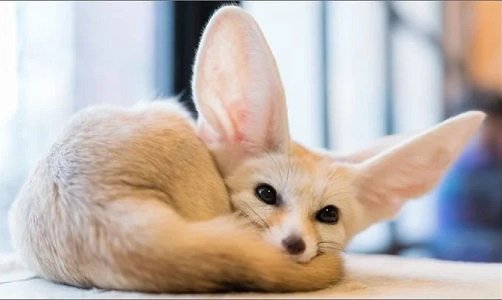
No, fennec foxes are not legal to own in California, no matter how small, adorable, or well-trained they may seem. Many people assume these tiny desert foxes should be treated like specialty pets, especially because they are legal in several other states. But California does not look at them that way. The state classifies every fox species, including the fennec, as restricted wildlife. That single classification closes every door for personal ownership. You can’t buy one, import one, breed one, rescue one, or bring one in from another state. The law treats a fennec fox exactly the same way it treats a raccoon or a skunk: a wild animal that cannot be kept as a pet. And in California, that definition is the beginning and end of the story.
The Law Behind the Ban
The legal foundation comes from the California Code of Regulations, Title 14, Section 671. This rule lists species that are considered too risky for regular households, and foxes appear clearly on that list. The law doesn’t make distinctions based on size, temperament, or popularity. A six-pound fennec fox with oversized ears is treated the same as a full-size red fox. Whether the animal was born in captivity or raised by a breeder also makes no difference. The law cares only about species identity. Because of that, even a perfectly tame, hand-raised fennec fox is illegal the moment it enters California borders.
The state’s policy has stayed consistent for decades. California believes exotic mammals should remain under the care of professionals, not pet owners, because their instincts never disappear completely. The rule was written broadly on purpose, to avoid case-by-case exceptions. Once a species appears on the restricted list, it stays there unless the state rewrites the entire regulation. And so far, nothing suggests the state has any interest in doing that for foxes.
Why California Treats Fennec Foxes as Wildlife
From the state’s point of view, the issue isn’t about cuteness or trend. The concern lies in behavior, disease, and environmental protection. A fennec fox may be tiny, but it still has sharp teeth, digging instincts, and unpredictable reactions. California also worries about exotic animals escaping and harming native species. Even a small fox could introduce a disease, kill fragile wildlife, or start breeding in the wild if it managed to survive long enough. The state has experienced enough problems with invasive species over the years that it now takes a strict approach with anything non-native.
The state also emphasizes that regular veterinarians often cannot provide specialized care for exotic mammals. Fennec foxes need different diets, different handling, and different medical treatment than household pets. California argues that this adds more risk to the general public and to the animal itself. By banning ownership outright, the state removes those risks before they begin.
Why Permits Don’t Apply to Pet Owners
One of the most common misunderstandings is the idea that special permits might make a fennec fox legal. In California, these permits exist only for specific professional uses. Film production companies, wildlife rescues, educational programs, universities, and scientific researchers may apply for them. These permits demand strict conditions, inspections, and facility standards. They are not designed for private households, and they cannot be used to authorize an exotic pet.
People who legally own fennec foxes in other states sometimes assume they can bring them to California with a health certificate or breeder documentation. That doesn’t work either. As soon as the animal reaches California, the owner violates import restrictions and the wildlife code. Even long-time owners lose legal standing the moment they cross the state line.
Common Myths About Fennec Fox Ownership
Every year, misinformation spreads online claiming that fennec foxes are allowed with certain paperwork or that small exotic mammals fall into a gray area. None of that is correct. California does not allow foxes under emotional-support rules, therapy-animal claims, or so-called “service animal” labels. Only dogs and, in rare federal cases, miniature horses can qualify as service animals. Trying to disguise a fennec fox as a service animal only leads to harsher penalties.
Another myth is that miniature exotic pets are treated differently because they can’t cause much harm. But California’s law does not consider size at all. A species is either domesticated or wild. Fennec foxes are classified as wild, and that classification locks them out of the pet category permanently.
Penalties for Possessing a Fennec Fox
When wildlife officers discover an illegally owned fennec fox, the animal is usually confiscated immediately. The owner may face fines, misdemeanor charges, or even a criminal complaint depending on the case. California rarely shows leniency even when the owner clearly cared for the animal. The state’s focus is preventing exotic species from spreading or becoming problems in the environment.
Final Conclusion
Fennec foxes are not legal in California, and there is no alternative path to make them legal as pets. The state bans all fox species, regardless of size, temperament, captivity history, or breeder paperwork. There are no loopholes, no household permits, no exceptions for out-of-state owners, and no special programs for exotic-pet enthusiasts. In California, a fennec fox remains a prohibited wild animal from the moment it arrives, and the law keeps that line firm.