No, in California, owning or mounting a device that functions or is intended to function as a firearm suppressor is illegal under state law, even if it is marketed as a “faux” or “dummy” suppressor. While some accessories resembling suppressors may not reduce sound, the law focuses on the effect and intent, not merely the label. California law clearly bans silencers (also called suppressors) for private civilians and treats possession of them as a felony. Until clarified by statute or case law, any accessory that could be treated as a suppressor carries serious legal risk.
What California Law Actually Says?
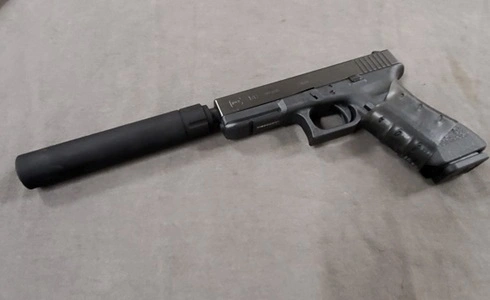
Under California Penal Code § 33410, “Any person … who within this state possesses a silencer is guilty of a felony.” The term “silencer” is defined broadly to cover devices designed to muffle or reduce the sound of a firearm. A “faux suppressor” marketed as a cosmetic accessory may still meet the functional definition if it could be used — even theoretically — to silence or reduce sound. California law makes the mere possession of a silencer illegal, regardless of whether a firearm is attached or used.
In practice, the state Department of Justice treats suppressors as prohibited Title II items under federal and state law. While fake or dummy devices that add no length or do no sound reduction may occupy a grey area, they carry risk if used or perceived as suppressors and show intent. Certain manufacturers of “faux suppressors” advertise that they are legal because they don’t reduce sound, but California law does not provide a clear exemption for “look-alikes” when context or use suggests suppression. For instance, an industry article says that in many states “fake suppressors are legal because they do nothing to suppress sound.” However, that guidance is for “every state” broad view and does not override California’s specific statute.
Why the “Faux” Label Doesn’t Mean Safe
- Intent and design matter: If a device appears like a suppressor and could reasonably be used as one or gives that impression to law enforcement, you risk being charged.
- Functional effect: If the muzzle device reduces sound, suppresses flash, or alters the firearm significantly, it’s likely treated as a silencer.
- Modification risk: If you mount a “faux suppressor” and later modify it to function as a silencer (threaded, with internal baffles) you can create grounds for prosecution.
- Accessory confusion: Even purely cosmetic “barrel shrouds” or “fake cans” might be problematic if they make the firearm longer or change configuration in ways that violate other California laws (barrel length, overall firearm length).
- Legal uncertainty: There’s little case law in California explicitly approving “faux suppressors,” so you’re dealing with uncertainty and potential risk of seizure or felony charge.
What You Can Do Without Legal Risk
- Use muzzle devices that are clearly approvedand compliant under California law — flash hiders, muzzle brakes, compensators — so long as they conform to barrel length and overall regulation.
- Avoid any accessory explicitly marketed as a “suppressor” or “silencer,” even if tagged “dummy,” unless you have specific legal advice.
- If you have questions about compatibility, configuration, firearm overall length, or accessory legality, consult a qualified California firearms attorney.
- Do not travel with or import devices that could be seen as suppressors. Transportation or possession may lead to seizure under § 33410.
Conclusion
Faux suppressors are not clearly legal in California. The state’s law prohibits possession of silencers and treats accessories that function (or may function) as suppressors as illegal. Merely labeling a device as “decorative” or “dummy” does not automatically exempt it — intent, function, design and how law enforcement or prosecutors view it matter. If you’re in California and consider mounting a device that resembles a suppressor, proceed with extreme caution and get legal advice first.