Yes, a muffler delete is illegal in California, but the reason is not as simple as people think. California does not allow any vehicle to operate on public roads without a functioning muffler. The state treats a muffler as an essential safety and noise-control device, just like headlights or brakes. A lot of drivers believe the only law that matters is the noise limit, but the truth runs deeper. Even if your car somehow stays under the 95-decibel limit, removing the muffler itself still violates the vehicle code. At the same time, California does permit certain aftermarket exhaust systems if they meet strict rules, which is why many drivers get confused. A muffler delete sounds like an easy performance upgrade, but in California, it almost always turns into a legal problem.
California Law Requires Every Vehicle to Have a Working Muffler
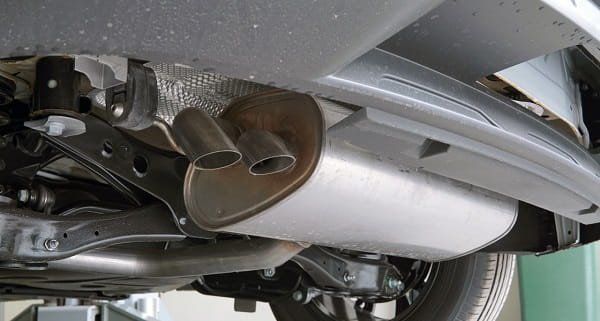
California Vehicle Code makes the rule very clear. Every car, truck, or motorcycle on public roads must have a muffler “in constant operation” to prevent excessive noise. The law does not allow a driver to remove the muffler, bypass it, or replace it with a straight pipe. The purpose of this rule is simple. A muffler controls sound, reduces noise pollution, and prevents engines from creating sharp, explosive exhaust blasts. When a muffler is removed, the sound becomes louder and harsher, even at idle. Because of that, the state considers a muffler delete a violation the moment the car enters a public road. California also forbids any device that amplifies exhaust noise, which includes some electronic cutouts and bypass valves used to get around muffler systems.
Why the 95-Decibel Rule Confuses So Many Drivers
California’s 95-decibel limit applies to cars weighing under 6,000 pounds. Many people assume that as long as their exhaust is below that limit, any modification is allowed. But that assumption is wrong. The decibel rule and the muffler requirement are two separate laws. You must pass both rules, not just one. Even if your custom exhaust somehow stays under 95 dB, you still break the law if your muffler is missing. A muffler delete almost always increases sound beyond legal levels anyway, but the idea that you can “game the system” by staying quiet enough is a myth. California measures noise using a very specific testing procedure at designated referee centers, and most muffler-deleted vehicles fail instantly under that standard.
How Enforcement Works in 2026
Police officers do not need a special device to pull you over for a loud or modified exhaust. If your car sounds unusually loud, has popping or crackling noises, or clearly lacks a muffler, you can be stopped. Officers commonly check for straight pipes, exposed welds, missing muffler cans, and aftermarket cutouts. Once they determine the muffler is removed or the exhaust is illegally modified, they can issue a citation. In earlier years, drivers could fix the issue and get the court to dismiss the ticket. But after changes in California enforcement, many exhaust violations are no longer simple “fix-it tickets.” Drivers may be required to appear in court or visit a state noise referee. Referee appointments can lead to inspections of the full exhaust system, not just the noise level. If the vehicle fails the test, the driver must restore the exhaust to legal condition before the case is cleared.
Aftermarket Exhausts Are Legal, but Muffler Deletes Are Not
California does allow aftermarket exhaust systems, but only if they meet strict noise and emissions rules. A legal aftermarket system still contains a muffler or a muffler-like chamber that reduces noise. Many performance exhaust systems sold in California carry a CARB (California Air Resources Board) approval number. This number shows the system meets California standards. A muffler delete, however, removes noise-control components. The car ends up louder, less controlled, and no longer compliant with state rules. That is why even high-end sports cars cannot legally run muffler deletes on public streets in the state. Track-only vehicles are allowed to remove mufflers because they never operate on public roads, but that exception does not apply to regular street cars.
Why California Is Strict About Mufflers
California has some of the toughest noise and emissions rules in the country. The state enforces strict limits to reduce noise in neighborhoods, protect public health, and avoid distractions for other drivers. Loud, unmuffled vehicles can disturb communities, especially in dense cities where sound echoes between buildings. The laws also aim to stop reckless driving trends involving backfire maps, pops-and-bangs tunes, and straight-pipe modifications. Muffler deletes are often associated with those behaviors, so enforcement remains tight.
Conclusion
In 2026, a muffler delete is not legal in California. The law requires every vehicle to have a functioning muffler, and removing it immediately violates the vehicle code. Even if the exhaust stays under the noise limit, the modification still breaks the rules. Drivers who want a louder sound must choose a legal aftermarket exhaust that stays within California’s strict standards. The state’s approach is simple: keep the roads safe, keep neighborhoods quiet, and prevent harmful or reckless modifications. Muffler deletes might be popular in other states, but in California, they remain firmly against the law.