When it comes to motorcycle accidents, they can produce vastly different financial consequences depending on a number of factors. For instance, what happened? Who was responsible? And how severely was the rider injured?
Even when two crashes appear similar, the resulting claims can have very different values once medical expenses, lost income, insurance coverage, and long-term effects are considered.
If you ride a motorcycle, it’s worth considering whether you’ll get enough in damage payments in the eventuality of an accident. Medical and repair bills can be high depending on the severity of the accident, and many riders learn this the hard way.
In this article, we’ll look at a few of the factors that affect how much you get paid in damages.
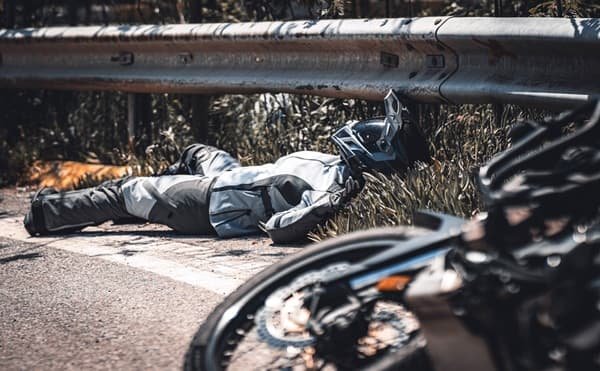
Severity, Lost Income, and Pain Are Top Factors
If you look at the raw data, motorcycle fatalities in California have decreased 10.2% from 649 in 2022 to 583 in 2023. Likewise, deaths from riding without a helmet dropped approximately 23.3% from 43 in 2022 to 33 in 2023. That’s data from the California Office of Traffic Safety, last updated in 2025.
Yet, the reality is that despite the statistical drop, motorcycle accidents are still common. Just a few days back, another motorcyclist passed away in Yolo County after crashing into the rear of a Toyota.
Such an accident rarely kills a 4-wheeler driver, and that is the nature of motorcycle riding. Severe injuries are far easier to sustain, making it one of the most significant factors when determining compensation in a motorcycle accident case.
As Freeman Law Firm notes, riders have considerably less physical protection with no frame, airbags, or seatbelts. This means a collision can result in a range of issues like fractures, spinal and internal injuries, road rash, or permanent disabilities.
Lost income is another important consideration. Someone who misses several weeks of work because of an injury may have a relatively straightforward wage-loss claim. However, the financial consequences can become much larger if the person cannot return to the same occupation or is forced to reduce their working hours permanently. In such cases, compensation can change.
Likewise, the amount of pain and suffering incurred also plays a role. Significant scarring or disfigurement from injuries can affect a person’s confidence, relationships, and everyday activities, which may contribute to noneconomic damages. These can also be factored in during the calculation for compensation.
The Decisions of the Insurance Companies Involved
An injured rider can have substantial medical expenses and still face difficulties recovering compensation if liability is disputed. Everyone knows that insurance companies frequently conduct their own investigations and collect evidence to determine who caused the collision. This can be a huge factor, as insurance companies are notorious for offering payouts that cover a fraction of one’s bills.
Thankfully, this is something that has gotten some oversight in recent years. As Yahoo News highlights, in 2025, California increased its minimum auto liability insurance for the first time in 50 years. Now, the new minimum for injury or death to one person is $30,000. Previously, that amount was $15,000.
According to Rex Frazier, president of the Personal Insurance Federation of California, the cost of repairs and medical bills has increased exponentially. This is undoubtedly a major reason for the payout amendments.
Previously, a person’s damages could easily exceed the available coverage, particularly when a crash results in permanent disability or extensive medical treatment. Now, riders have a better chance of being paid more fairly. That said, insurance companies and their decisions still remain a key factor. Even today, the amount of damages calculated in a claim and the amount paid can be quite disproportionate.
The Type of Motorcycle, Rider Conduct, and Long-Term Life Impact
The circumstances surrounding the motorcycle itself can become relevant when insurers and attorneys evaluate a crash. California also seems to be going through a phase of troublesome accidents with two-wheelers. It’s even come to the point that Amazon has decided to stop selling high-speed e-bikes in the state.
For instance, The Guardian reports that in Orange County, an 81-year-old man was killed after being struck by an e-motorcycle. According to Rob Bonta, the state’s attorney general, sometimes what is marketed as or looks like an e-bike is not a bike at all.
If they’re as powerful as conventional motorcycles, the legal lines naturally get blurry. This is why vehicle classification matters because different types of two-wheelers may be subject to different rules, which can also affect payouts.
Similarly, rider conduct can also play an important role. Factors like whether the rider was wearing a helmet, speeding, changing lanes, or otherwise violating traffic rules are commonly investigated. So, someone who was driving recklessly without a helmet may not receive as much as a rider who was following the law.
Frequently Asked Questions
1. Can I still recover damages if I was partially at fault for a motorcycle accident?
Yes. California’s comparative negligence rules allow you to pursue compensation even if you share some responsibility for the crash. However, your total recovery can be reduced according to your percentage of fault. For example, being 20% responsible could reduce a $100,000 award to $80,000.
2. Can a motorcycle accident settlement include future medical expenses?
Yes, future medical expenses can potentially be included when an injury is expected to require continued treatment. These costs might include additional surgeries, rehabilitation, medication, or specialist care. Medical opinions and other evidence are generally important for estimating what treatment may be needed and how much it could cost.
3. What should I do immediately after a motorcycle accident to protect my claim?
After a motorcycle accident, seek medical care promptly, even if you initially feel fine, since some injuries may not show symptoms immediately. Document the scene with photos of the vehicles, roadway, and injuries when possible. Collect witness details, report the crash, and retain all medical and expense records.
Key Numbers & Statistics at a Glance
| Motorcycle fatalities in California in 2022 | 649 |
| Motorcycle fatalities in California in 2023 | 583 |
| California’s minimum liability coverage for injury/death to one person before 2025 | $15,000 |
| California minimum liability coverage for injury/death to one person from 2025 | $30,000 |
| California minimum liability coverage for injury/death to more than one person | $60,000 |
There is naturally no single payout amount that applies to every motorcycle crash in California. The potential value of a claim will depend on a combination of several factors as we have discussed. Yes, California’s declining motorcycle fatality figures provide some encouraging context, but injuries, whether mild or life-changing, still happen every day.
Some riders may never be able to walk or work their original jobs again. Others may go into massive debt from the medical bills incurred. In these situations, a compensation payout can be what turns their life around. Ultimately, having skilled legal counsel who understands the many factors at play and advocates aggressively on your behalf is what maximizes your net payout.