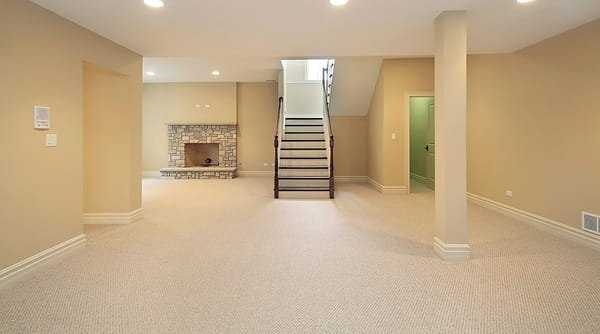
If you grew up in the Midwest or East Coast, basements feel normal. They’re where laundry machines live. Where kids hang out. Where holiday decorations get stored.
Then you move to California — and suddenly basements almost disappear.
Homes sit on slabs. Some have crawl spaces. But full underground basements? Rare.
People often assume it’s just a style choice. Or a quirk of architecture.
It’s not.
California avoids basements for very practical reasons: earthquakes, soil conditions, water issues, construction costs, and climate. Together, they make basements more trouble than they’re worth.
Let’s break down why digging down never became standard here.
Earthquakes Make Basements Riskier and More Expensive
This is the biggest reason.
California sits on active fault systems. The ground moves. Sometimes violently.
Basements create deep rigid boxes under homes. During earthquakes, that rigid structure can crack, shift, or collapse if not heavily reinforced. Building safe basements requires extensive seismic engineering — thicker walls, special rebar, and flexible connections.
That drives costs way up.
Instead, most California homes are built on slab foundations or crawl spaces, which perform better during shaking and are cheaper to reinforce.
In other states, basements help protect pipes from freezing.
In California, they just add seismic risk.
Much of California Has High or Unstable Groundwater
In many parts of the state — especially near the coast or rivers — groundwater sits relatively close to the surface.
Digging a basement means fighting water.
That requires:
- Waterproof concrete
- Drainage systems
- Sump pumps
- Ongoing moisture management
Without constant maintenance, basements can flood or develop mold.
Builders avoid this headache by staying above ground.
California Soil Isn’t Basement-Friendly
Large areas of California sit on clay-heavy or sandy soils.
Clay expands when wet and shrinks when dry. Sand shifts easily. Both can crack basement walls over time.
In earthquake zones, unstable soil makes underground rooms even riskier.
So instead of digging deep, builders pour slabs on grade or leave shallow crawl spaces.
It’s simpler. It’s safer. It lasts longer.
The Climate Makes Basements Unnecessary
Basements became common in colder states because foundations had to extend below the frost line. If you’re already digging that far, adding a basement makes sense.
California doesn’t have deep frost lines.
There’s no freezing ground forcing builders to dig several feet down.
So there’s no structural incentive to add basements.
Plus, California’s mild climate means storage rooms, garages, and attics work just fine.
Basements solve problems California doesn’t have.
Construction Costs Are Already High
Building anything in California is expensive.
Labor costs are high. Permits take time. Environmental reviews slow projects. Seismic codes add complexity.
Adding a basement can increase construction costs by tens of thousands of dollars — sometimes more — without adding equal resale value.
Most buyers would rather spend that money on extra bedrooms or outdoor space.
Developers follow demand.
And demand for basements here is low.
Wildfires and Flooding Add More Risk
In wildfire-prone areas, underground spaces can trap smoke or become unsafe during evacuations.
In flood zones, basements can fill rapidly with water.
These added risks make them unattractive to insurers and builders alike.
California Homes Grew Outward, Not Downward
Historically, California had room to expand horizontally.
Unlike dense older cities back east, California developed later, when land was abundant. Homes spread outward instead of stacking downward.
Garages, patios, and single-story layouts became the norm.
Basements never had a chance to become standard.
You Can Find Basements — Just Not Many
Some older homes in places like San Francisco or Los Angeles do have partial basements, especially pre-1940 builds.
But they’re exceptions — not the rule.
Modern construction overwhelmingly avoids them.
The Bottom Line
California doesn’t have basements because earthquakes make them costly to engineer, groundwater and soil conditions complicate construction, the climate removes the need for frost protection, and builders get more value by expanding homes outward instead of underground.
Basements aren’t missing here by accident.
They simply don’t make sense for California’s geology, weather, or economics.
In this state, it’s safer — and cheaper — to build up and out than to dig down.