Every election cycle, it happens.
Polls close, results pour in from most of the country, and California… is still counting. Days pass. Sometimes weeks. Headlines pop up asking why the nation’s most populous state can’t seem to finish tallying ballots like everyone else.
To many people, it feels suspicious or inefficient.
In reality, California’s slow vote count isn’t a glitch in the system. It’s the result of deliberate policy choices designed to maximize participation, verify ballots carefully, and protect voter rights — even if that means patience is required.
California doesn’t rush elections. It prioritizes accuracy and access.
Here’s why that takes time.
California Accepts Mail Ballots After Election Day
This is the biggest reason.
California allows mail-in ballots to be counted as long as they’re postmarked by Election Day and arrive within several days afterward. That means election officials are still receiving legal ballots well after polls close.
Other states cut things off earlier. California doesn’t.
So while TV networks may project winners elsewhere, California is literally still opening envelopes.
With millions of mail ballots flowing in, that alone adds days to the process.
Almost Everyone Votes by Mail
California automatically sends mail ballots to every registered voter.
That’s tens of millions of ballots.
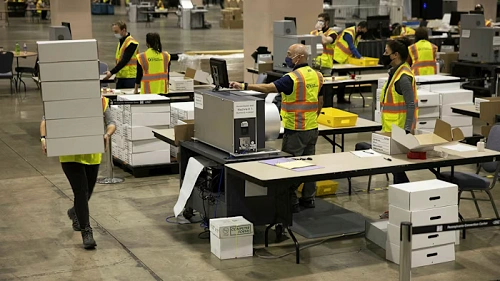
Mail voting increases turnout, but it also creates massive logistical work: signature checks, envelope sorting, ballot opening, scanning, and verification. Each step must be done carefully and often by hand.
Counting in-person votes is fast.
Processing millions of mailed envelopes is not.
Every Signature Is Checked
Before any mail ballot is counted, election workers compare the voter’s signature on the envelope with the one on file.
If there’s a mismatch, the ballot is set aside.
Then the voter is contacted and given time to “cure” the issue — meaning they can confirm their identity and fix the problem. California gives voters days after the election to do this.
This protects people from having their vote thrown out over a shaky signature — but it also slows the final tally.
Accuracy beats speed.
Provisional Ballots Take Extra Time
If there’s any question about a voter’s eligibility — wrong precinct, registration issues, missing records — that person casts a provisional ballot.
Those ballots aren’t counted immediately.
Officials must research each case individually to confirm eligibility before adding the vote to totals. In close races, thousands of provisional ballots can pile up, each needing manual review.
Again: slow, but careful.
California Is Huge and Decentralized
California doesn’t run elections from one central office.
Each of the state’s 58 counties manages its own voting process. Some counties are small and finish quickly. Others serve millions of residents and take longer.
Results trickle in unevenly because each county moves at its own pace.
Coordinating all of that across a state larger than most countries isn’t simple.
State Law Requires Thorough Audits
Before results are certified, California mandates audits to confirm machines counted ballots correctly. Random samples are hand-counted and compared against electronic totals.
This adds another layer of delay — but it also adds confidence in the outcome.
Certification usually happens weeks after Election Day, once every ballot has been processed and verified.
California Chooses Inclusion Over Speed
Here’s the core truth.
California intentionally designs its system to make voting easy and accessible: universal mail ballots, extended deadlines, signature curing, and provisional protections.
That means more people get their votes counted.
But it also means results take longer.
Some states prioritize fast reporting.
California prioritizes making sure every eligible vote is included.
The Bottom Line
California takes so long to count votes because it allows late-arriving mail ballots, checks every signature, reviews provisional votes, audits results, and processes millions of ballots across dozens of counties.
It’s not chaos.
It’s a slow, methodical system built around voter access and verification.
You can have fast elections — or you can have inclusive, carefully checked ones.
California chose the second.