When people think of California, they picture Los Angeles beaches, San Francisco bridges, or Silicon Valley skyscrapers. Sacramento rarely tops the list. So it often surprises newcomers to learn that Sacramento — not LA, not San Francisco — is California’s capital.
It feels counterintuitive. Sacramento isn’t the biggest city. It isn’t the most famous. It doesn’t dominate entertainment, tech, or tourism.
Yet it holds the seat of state power.
The reason goes back to California’s chaotic early years, when gold fever ruled the West, cities rose overnight, and lawmakers struggled to govern a rapidly growing population. Sacramento didn’t become capital because it was glamorous. It became capital because it was central, accessible, safer from coastal threats, and deeply tied to California’s birth as a state.
Here’s how that happened.
California Didn’t Always Have One Capital
After becoming a state in 1850, California bounced its government around several cities. Lawmakers first met in San Jose, then moved to Vallejo, briefly to Benicia, and finally to Sacramento.
Why all the moving?
Early California lacked infrastructure. Roads were poor. Cities competed for influence. Political leaders were still figuring out where power should live.
Each location had problems — flooding, small facilities, political pressure, or simple inconvenience.
The state needed stability.
Sacramento Was Perfectly Positioned
Sacramento sat at the meeting point of the Sacramento and American Rivers. During the Gold Rush, this made it a vital transportation hub. Supplies, people, and gold all flowed through the city.
It was also closer to mining regions than coastal cities, placing lawmakers nearer to the economic engine of early California.
Geography mattered.
Sacramento offered easier access to the interior while remaining reachable from San Francisco by riverboat. In a time before highways and rail networks, that balance was critical.
It Was Safer From Foreign Attack
In the mid-1800s, coastal cities were vulnerable. Foreign naval attacks were a real concern. Sacramento’s inland location made it harder to reach by enemy ships.
That strategic distance from the coast gave lawmakers peace of mind during an era when California’s future still felt uncertain.
Security helped seal the deal.
Sacramento Fought Hard to Become Capital
Local leaders in Sacramento actively courted the state government. They offered land for government buildings and promised support for permanent facilities.
In 1854, Sacramento was officially named the capital.
Even after devastating floods in the 1860s, the city rebuilt. Streets were raised. Infrastructure improved. Rather than abandoning Sacramento, the state doubled down and invested in making it permanent.
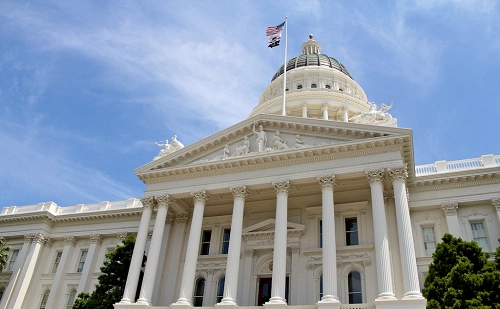
The Capitol building opened in 1874, locking Sacramento’s role into history.
Central Location Still Makes Sense Today
While California has grown enormously since then, Sacramento remains geographically central compared to coastal megacities. It sits within reasonable reach of Northern California, the Central Valley, and the Sierra foothills.
It also avoids the congestion and sky-high costs of cities like Los Angeles and San Francisco, making it more practical for housing government agencies and employees.
In many ways, Sacramento still serves its original purpose: a functional, accessible hub for state governance.
It’s a Government City by Design
Over time, Sacramento evolved into a classic capital city. State offices dominate downtown. Policy groups, lobbyists, and public servants shape its economy.
It doesn’t compete with LA’s entertainment industry or Silicon Valley’s tech scene — and that’s intentional. Sacramento exists to run the state.
The Bottom Line
Sacramento became California’s capital not because it was flashy, but because it was central, connected to the Gold Rush economy, safer from coastal threats, and willing to support permanent government infrastructure.
It was a practical choice made during a turbulent time — and it stuck.
Today, Sacramento stands as a reminder that power doesn’t always live in the loudest city. Sometimes it settles where things simply work.