Yes — ceramic tint is legal in California, but only when it follows the state’s strict window-tinting rules. Many drivers assume ceramic tint is illegal because it blocks heat more effectively than standard tint. Others believe it is fully allowed anywhere on the car because it is transparent to radio signals and considered high-end film. The truth sits in the middle. Ceramic tint is lawful, but the level of darkness and where you place it matters. California regulates window tint based on visibility, not based on the material of the film. So ceramic tint is legal, but only when it meets the state’s required Visible Light Transmission (VLT) standards.
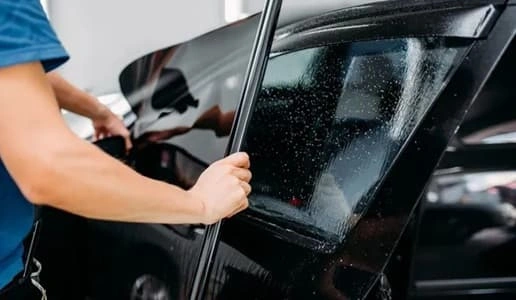
Ceramic Tint Is Legal — The Darkness Level Is What Matters
California law cares about how much light passes through the window, not what type of tint you use. Ceramic film, dyed film, metallic film — all are legal as long as they don’t go below the state’s required visibility threshold. Ceramic tint is popular because it blocks heat and UV rays without necessarily becoming too dark. But if the installer makes it darker than the legal limit, the tint becomes illegal regardless of its type.
Front Side Windows Must Allow at Least 70% Light
California requires the driver’s and passenger’s front side windows to let in 70% or more of outside light. This is the strictest tint rule in the state. Because many vehicles come from the factory with slightly tinted glass, adding ceramic film often pushes the VLT below 70% unless a very light shade is used. This is where most ceramic-tint violations happen. A ceramic tint that looks mild to the eye may still drop the VLT below the legal limit.
The Front Windshield Has Very Narrow Tint Permissions
You cannot tint the main viewing area of the front windshield in California. The only legal tint for the windshield is:
- A clear, non-reflective ceramic or UV film anywhere on the windshield
- A darker strip of tint on the top four inches (the “sun visor” area)
This means ceramic tint can be used on the windshield only if it is essentially transparent and does not impact visibility. Dark windshields are illegal even if the film itself is high-quality ceramic.
Rear Windows Have Much More Freedom
California allows any darkness on:
- The rear side windows
- The rear windshield
As long as the vehicle has both left and right outside mirrors. This means ceramic tint is fully legal on the rear windows, no matter how dark it is. Many drivers use deep ceramic tint for heat control on the back half of the car while keeping the front windows light enough to remain legal.
Reflective or Mirrored Ceramic Tint Can Still Be Illegal
Even if the tint has the correct light-transmission percentage, California also restricts reflective, mirrored, or metallic films. Some ceramic tints come with subtle reflective properties, so installers need to choose compliant options. The tint cannot look like a mirror or reflect too much light; otherwise, it violates glare regulations.
Medical Exemptions Allow Darker Ceramic Tint
California does allow darker tint on the front windows if the driver has a documented medical condition requiring reduced sunlight exposure. This requires:
- A medical exemption letter
- A compliant clear or light-transmission-approved film
- Carrying the documentation in the vehicle
Even under a medical exemption, the windshield cannot be fully darkened. The state still requires safe visibility for drivers and law enforcement.
Why California Regulates Tint So Strictly
California’s tint laws exist for safety. Police must be able to see inside the vehicle during stops, and drivers must maintain clear visibility, especially at night. The material of the tint isn’t the issue — ceramic, metallic, dyed, hybrid — the law focuses on how dark the tint is and whether it affects safe driving.
Conclusion
In 2026, ceramic tint is fully legal in California as long as it follows the state’s visibility rules. The front side windows must stay at or above 70% VLT, the windshield can only have a clear ceramic film or a visor strip, and the rear windows can be any darkness if side mirrors are installed. California’s approach is simple: ceramic tint is allowed, but safe visibility always comes first.