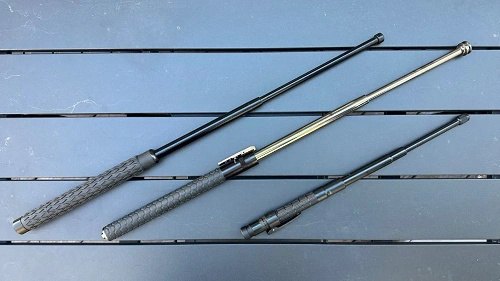
Yes, the possession of most batons (including expandable batons) is temporarily protected due to a federal court injunction. But the law banning them still exists, the state is fighting to restore the ban, and owning a baton remains legally risky. California historically prohibited civilians from possessing batons under Penal Code § 22210, treating them as dangerous impact weapons. In 2024, a federal judge ruled that this ban violates the Second Amendment (Fouts v. Bonta), blocking enforcement only for “billy clubs.” The state immediately appealed. Until the Ninth Circuit decides, California cannot enforce the ban against possession. That means possession is protected by the injunction — but the law could snap back into place depending on the appeal.
So, civilians can currently possess a baton without prosecution, but the legality is temporary and uncertain. And while possession is shielded, misuse remains fully criminal.
How the Ban Worked Before the Ruling
For decades, Penal Code § 22210 made it illegal to import, lend, sell, or possess a “billy” (a term that covers batons, collapsible clubs, and similar weapons). Violations could be charged as misdemeanors or felonies, carrying up to one year in county jail or up to three years in state prison. Only law enforcement and licensed security professionals with specific baton training certificates were allowed to carry them. This strict ban treated batons like blackjacks, saps, and slungshots — objects designed primarily to cause blunt-force injury.
What the Court Changed — and Didn’t Change
In February 2024, a federal judge ruled that ordinary citizens have a constitutional right to possess a billy club for self-defense, finding that batons are common personal-defense tools. The court issued a permanent injunction blocking California from enforcing the possession ban. But the ruling:
- did not repeal Penal Code § 22210
- did not legalize sales, importation, or distribution
- did not protect the possession of all § 22210 weapons
- did not legalize using batons as offensive weapons
In other words, the possession of a baton is protected by the injunction, but the rest of the original statute remains enforceable.
Key Takeaways for 2026
Possession Is Currently Protected (But Risky)
Because of the injunction, law enforcement and prosecutors cannot enforce § 22210 against possession of a billy club. But the statute still exists, and the protection could vanish if the Ninth Circuit reverses the ruling. Anyone possessing a baton is relying on a court decision still under challenge.
Appeal Is Pending
The California Attorney General immediately appealed Fouts v. Bonta to the U.S. Court of Appeals for the Ninth Circuit. The appeal is active. If the Ninth Circuit overturns the decision, the ban could return instantly — and possession could again become a crime.
Other Weapons Are Still Banned
The injunction only protects possession of “billy clubs.” It does not legalize possession of other weapons listed in § 22210, such as blackjacks, sandbags, saps, or slungshots. Those items remain fully illegal.
Use Is Still Regulated
Even though possession is protected, using a baton unlawfully can still lead to serious charges. California can still prosecute:
- Assault with a Deadly Weapon (PC § 245)
- Brandishing (PC § 417)
- Battery or related violent crimes
The injunction protects possession, not misuse.
Exemptions Still Exist
Law enforcement and licensed, uniformed security guards who complete state-certified baton training (through BSIS) remain legally authorized to carry batons on duty, unaffected by the court battle.
What This Means for Civilians Right Now
You can legally possess a baton in California in 2025 only because the injunction is currently blocking enforcement. But:
- You cannot legally sell, import, or lenda baton — those actions are still prohibited.
- You cannot assume that possession will remain protected — the appeal may overturn the injunction.
- You must still use the baton only for lawful self-defense, or you risk criminal charges unrelated to § 22210.
If you choose to own a baton right now, you are relying on a contested court ruling that could change.
Conclusion
As of 2026, batons are temporarily legal to possess in California due to a federal injunction, but they are not fully legalized. The ban still exists in the Penal Code, the state is appealing the decision, and enforcement could return depending on the Ninth Circuit’s ruling. Possession alone is protected for now — not sales, importation, distribution, or misuse.
The safest legal takeaway is simple: you may currently own a baton in California, but do so with caution, keep documentation of the ruling if questioned, and understand that the legality could change abruptly depending on the outcome of the state’s appeal.