No — servals are not legal to own in California. Many people see servals online as exotic pets or watch videos of them living in homes and assume they can be kept like large housecats. Others believe that captive-bred servals or hybrids might be treated differently. The truth is strict and simple. California bans private ownership of servals because they are classified as wild, dangerous, and potentially harmful to native wildlife. No matter where the serval comes from, and no matter how tame it may appear, keeping one as a pet is illegal for private residents. Only permitted facilities such as zoos, wildlife centers, and certain educational programs may house them.
California Classifies Servals as Restricted Wildlife
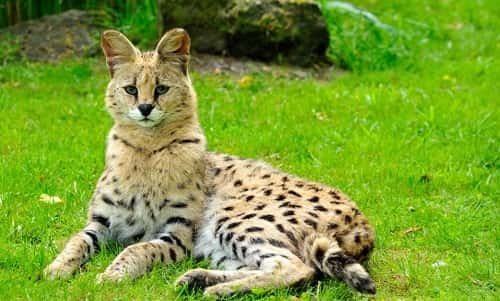
California’s exotic-animal regulations place servals in the category of restricted wild animals. This classification covers animals considered dangerous, unpredictable, or capable of causing ecological harm if released or escaped. Servals are medium-sized African wild cats with strong hunting instincts, incredible jumping power, and behaviors that are not compatible with domestic settings. Because of this, the law bans their possession, importation, breeding, and sale within the state for private pet ownership. The law does not distinguish between wild-caught servals and captive-bred servals — both are treated the same.
Why Servals Are Banned for Private Ownership
Servals are beautiful but powerful animals. They can leap several feet in the air, break through weak enclosures, and catch prey with speed and accuracy. California views them as a threat to native wildlife if they escape, especially birds and small mammals. They can also be dangerous in households because they do not behave like domestic cats and can injure people accidentally. Their dietary needs, enclosure requirements, and territorial behaviors make them unsuitable for ordinary pet environments. Because of these risks, the state prohibits private ownership to protect both people and wildlife.
Permits Are Not Available for Pet Owners
Some exotic-animal enthusiasts believe they can obtain a special permit to own a serval legally. In California, that is not possible. The state does not issue permits for servals to private citizens, no matter how experienced or responsible the prospective owner may be. Permits are reserved for zoos, sanctuaries, research institutions, and certain educational programs that meet strict housing, training, and inspection standards. A private home cannot qualify for these permits, and the state does not make exceptions.
Hybrids Like Savannah Cats Are Regulated Differently
Many people confuse servals with Savannah cats, which are serval–domestic cat hybrids. California allows certain Savannah cat generations, but not the early generations closest to the serval. High-percentage hybrids with strong serval traits are restricted. Only later-generation Savannah cats — the ones considered fully domestic — are legal in the state. But even these hybrids have strict limits. The legality of Savannah cats does not change the ban on pure servals. A full serval, regardless of its upbringing, is illegal as a pet.
Possessing or Importing a Serval Can Lead to Penalties
Keeping a serval in California, even privately and out of public view, can result in confiscation of the animal, fines, and misdemeanor charges. Attempting to buy or transport a serval into the state is also illegal. The law applies the same whether the animal is a baby, an adult, or was adopted from another state. California enforces exotic-animal rules strongly, especially with species capable of harming native ecosystems or posing safety risks.
Why Servals Are Difficult Pets Even in States Where They Are Legal
Even in states where servals are allowed, they are considered one of the most challenging exotic pets to keep. They require large enclosures, enriched environments, specialized diets, constant supervision, and professional-level handling. Most servals never behave like affectionate domestic cats. Their instincts remain wild no matter how young they are when raised. This is another reason California does not allow them as pets — the risks and demands outweigh any argument for private ownership.
Conclusion
In 2026, servals are completely illegal to own in California. The state classifies them as restricted wild animals and does not issue permits for private pet ownership. Servals cannot be bought, bred, imported, or kept in homes. Only zoos and similar institutions may house them under strict regulation. California’s approach is clear: servals are wild animals, not domestic pets, and the law protects both the public and the animal by keeping them out of private households.