Yes, golf carts can be street legal in California, but they are only allowed on public roads under specific conditions. Many people assume a golf cart can roam any neighborhood street because it seems less dangerous than a car. Others believe they are banned from public roads entirely. The truth is in the middle. California allows golf carts on certain roads if they meet basic safety requirements and if the street is designated for their use. Some carts must be upgraded to become “Low-Speed Vehicles” (LSVs), while others can be used without registration—but only in limited areas. Understanding this distinction is the key to knowing whether your golf cart is street legal in California.
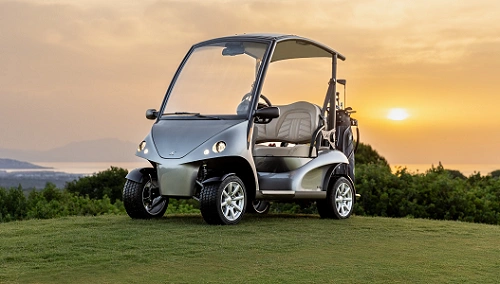
Golf Carts vs. Low-Speed Vehicles: California’s Legal Difference
California law separates golf carts from low-speed vehicles (LSVs):
- Golf Cart:A small motorized vehicle with a top speed of no more than 15 mph, usually designed to carry no more than two people and their golf equipment.
- Low-Speed Vehicle (LSV):A modified or factory-built golf-style cart that can reach 20 to 25 mph, must be registered with the DMV, and must meet additional safety equipment rules.
A regular golf cart that stays under 15 mph does not need DMV registration if it is only driven in a golf cart zone. But if you modify the cart or drive it faster than 15 mph, it becomes an LSV, requiring DMV registration, license plates, insurance, and safety features.
Where Golf Carts Can Be Driven Legally
A standard, unregistered golf cart may only be driven:
- On roads with a posted speed limit of 25 mph or less
- Within one mile of a golf course or designated golf cart community
- In officially marked golf cart zonesapproved by local government
- On private property or private community roads that permit them
Cities often designate golf cart neighborhoods, resort areas, retirement communities, and beachfront zones. However, not every city allows them, and some require local permits. Outside these approved areas, an unregistered golf cart is not street legal—regardless of how slowly it travels.
When a Golf Cart Must Be Registered
If a golf cart is capable of going over 15 mph, it becomes a Low-Speed Vehicle (LSV) and must be treated like a motor vehicle. That means it must:
- Be registered with the DMV
- Have a license plate
- Have insurance
- Be operated by a licensed driver
Once registered as an LSV, it may operate on roads with speed limits of up to 35 mph, though the vehicle itself still cannot exceed 25 mph. Driving one on faster roads is illegal.
Required Safety Equipment for Street-Legal LSVs
To qualify as street legal, an LSV must be equipped with:
- Headlights and brake lights
- Turn signals
- Rearview mirrors
- Windshield
- Seat belts
- Reflectors
- Parking brake
Golf carts that lack these cannot be registered and must stay in golf cart zones only.
Insurance and Licensing Rules
A normal golf cart used only in golf cart zones doesn’t require insurance or a driver’s license. However, once the cart qualifies as an LSV, the driver must:
- Carry a valid California driver’s license
- Maintain vehicle insurance
Unauthorized operation without insurance or licensing can result in traffic citations just like driving a car illegally.
Can Kids or Teens Drive Golf Carts?
Children cannot drive golf carts on public roads in California unless they hold a driver’s license and meet local requirements. Even inside gated communities, local laws may require a minimum age. Kids may drive carts only on private property with the owner’s consent and outside of public roadways.
Conclusion
Golf carts are legal on California streets, but only under strict conditions. Standard 15-mph carts may operate without DMV registration, but only in official golf cart zones, near golf courses, or in approved communities. Carts capable of higher speeds must qualify as Low-Speed Vehicles and meet safety, licensing, registration, and insurance requirements. In California, a golf cart can be street legal—but only when used in the right places and with proper equipment.