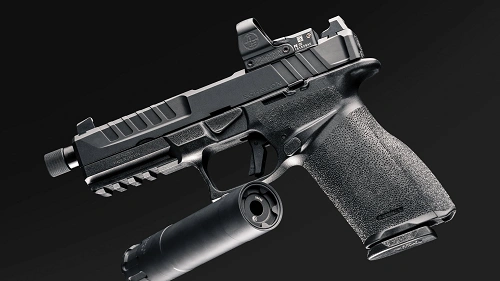
Yes, shotguns are legal in California, but the law places numerous restrictions on how they are purchased, configured, stored, transferred, and used. The word “shotgun” often makes people assume either complete freedom or complete prohibition in a state known for strict gun laws. Some gun owners believe all shotguns are treated like ordinary hunting tools, while others assume the state bans tactical models outright. The reality lies between those extremes. California allows residents to purchase and own many types of shotguns, from sporting and hunting models to law-enforcement-style pump actions. However, once a shotgun is classified as “assault,” “short-barreled,” or illegally modified, it becomes prohibited. In California, the shotgun itself isn’t the problem—it’s how the shotgun is configured and how it’s used.
Legal Ownership and Purchase Requirements
Anyone 18 or older may legally purchase a shotgun from a licensed dealer in California, provided they pass background checks and meet state eligibility requirements. Buyers are required to complete the standard ten-day waiting period, submit to a firearm background check (DROS), and possess a valid Firearm Safety Certificate. California does not differentiate between a sporting shotgun and a tactical shotgun at the moment of purchase. The law focuses on who is buying the firearm, whether it was lawfully transferred, and whether the firearm is legally configured. Private sales must be processed through licensed dealers, and off-the-books transfers are illegal. California also prohibits acquisition by individuals who fall under state or federal firearm prohibitions, including certain misdemeanors, protective orders, and mental-health prohibitions.
What Types of Shotguns Are Legal?
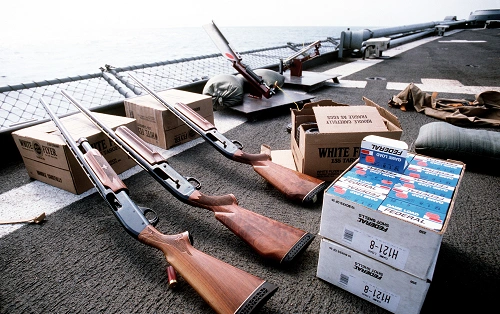
Most conventional shotguns are fully legal. Pump-action and traditional break-action models, commonly used for hunting and home defense, are allowed without special restrictions. Semi-automatic shotguns are also legal, but they must comply with California’s “assault weapon” regulations. This means they cannot have certain features that make them classify as prohibited weapons. A semi-auto shotgun becomes illegal if it combines a detachable magazine with tactical features such as a pistol grip, folding stock, or forward vertical grip. As long as the shotgun has a fixed magazine and avoids restricted features, it remains legal.
In other words, the law does not ban the shotgun—it bans certain modifications. Californians can lawfully own semi-auto shotguns, but they must be careful not to configure them in a way that transforms them into an “assault weapon” under Penal Code § 30515.
Short-Barreled Shotguns Are Illegal
While most shotguns are legal, short-barreled shotguns (SBS) are strictly prohibited. California Penal Code § 17180 defines a short-barreled shotgun as:
- A shotgun with a barrel shorter than 18 inches
- A shotgun with an overall length shorter than 26 inches
- Any firearm manufactured or modified to meet those measurements
Shortening a shotgun barrel, adding a folding stock that reduces the length too much, or buying a factory-made SBS—even if federally registered—is illegal for California civilians. The state does not recognize federal SBS tax stamps or permission granted under the National Firearms Act. Once a shotgun becomes an SBS, it becomes contraband in California, regardless of federal approval.
Magazine and Ammunition Restrictions
California law imposes a ten-round magazine limit on most firearms, including shotguns. Although many shotguns hold far fewer than ten rounds by default, detachable-magazine shotguns capable of higher capacity are regulated more heavily. Shotguns with revolving cylinders—often called “revolving shotguns”—are treated as illegal assault weapons by design. Ammunition is subject to purchase restrictions, requiring background checks for every sale, and private transfers are not permitted.
Home Defense and Hunting Use
Shotguns remain popular for home defense in California because the state imposes fewer configuration limits on pump-action models compared to rifles. Tactical lights, standard-length stocks, and other common defensive accessories are legal. For hunting, California regulates species, season, and ammunition type. Lead shot is banned for hunting in most cases, and hunters must use approved non-lead ammunition for all wildlife.
Transportation and Storage Requirements
Shotguns must be transported unloaded in a secure case or locked container. Inside the home, no statewide requirement mandates locked storage, but if minors are present or have access, owners may face criminal liability if a child gains access to the firearm. In vehicles, ammunition must be stored separately from the firearm unless securely contained.
Conclusion
Shotguns are legal in California, and residents may lawfully purchase and possess pump-action, break-action, and compliant semi-automatic models. However, California bans short-barreled shotguns and prohibits certain tactical configurations that transform a legal shotgun into a regulated assault weapon. The state focuses on ownership restrictions, safe configuration, and lawful use rather than banning shotguns outright. With proper compliance, Californians can own shotguns for sport, hunting, recreation, and home defense. The key is understanding that in California law, it is not the shotgun itself that matters—it is how the shotgun is built and used.