Yes, muzzle brakes are legal in California, but only when they are true muzzle brakes and not disguised or mislabeled flash suppressors. This is one of the most misunderstood firearm rules in the state, because California bans certain muzzle devices while allowing others, and the difference often comes down to the device’s purpose and physical design. Many gun owners assume that anything attached to the end of a barrel is automatically restricted, while others think they can swap parts freely as long as the item is marketed the right way. But California does not rely on marketing terms or brand labels. The state looks at what the device actually does. A muzzle brake remains legal as long as it reduces recoil and muzzle rise without suppressing or hiding the flash. The moment a device is designed to reduce visible flash, the law treats it as a flash suppressor — and flash suppressors are banned on any rifle that falls under the “features” test of California’s assault-weapon laws. Understanding that difference is essential for anyone owning or modifying a rifle in California.
How California Distinguishes Muzzle Brakes from Flash Suppressors
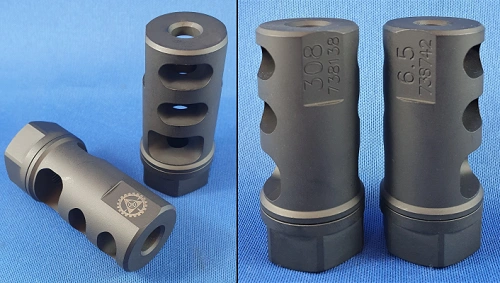
A muzzle brake redirects gases sideways or upward to reduce recoil and muzzle climb. A flash suppressor disperses burning gases to reduce visible flash. The problem is that some devices sit in a gray zone where they can do both. California focuses on the intended function and the physical features of the device, not what a manufacturer prints on a box. A real muzzle brake has small ports or baffles angled to counter recoil. A flash suppressor usually has prongs, tines, open slots, or designs that spread gas forward to dim the flash. If the device’s structure or marketing suggests flash reduction, even slightly, the state may classify it as a flash suppressor.
Why Muzzle Brakes Are Allowed but Flash Suppressors Are Not
California’s assault-weapon law uses a feature-based definition. A semi-automatic centerfire rifle with a detachable magazine becomes an illegal configuration if it has certain features, including a flash suppressor. The reasoning is that flash suppressors improve concealment by reducing muzzle flash, which the state considers a tactical advantage inappropriate for civilian rifles. Muzzle brakes, on the other hand, increase recoil control but do not help conceal the shooter’s position. Because of that, California does not restrict muzzle brakes by themselves. They can be used on featureless rifles, fixed-mag rifles, or legal semi-automatic builds as long as the device is not functioning as a flash suppressor.
Why Mislabeling Creates Legal Risks
Some companies try to market hybrid devices as “compensators” or “brakes” even when they have flash-suppressor characteristics. California agencies have repeatedly said they will not rely on e-commerce descriptions to determine legality. They look at the design: open-ended prongs, long forward-facing slots, or multiple open tines can push a device into flash-suppressor territory. If a rifle has a detachable magazine and the muzzle device is judged a flash suppressor, the rifle instantly becomes an illegal assault weapon — even if the owner believed it was legal. That’s why owners are advised to avoid anything that looks even remotely close to a flash hider.
Situations Where Muzzle Brakes Are Perfectly Legal
A muzzle brake is legal on:
- A featureless rifle build
- A fixed-magazine rifle
- A rimfire rifle
- A bolt-action or single-shot firearm
- Any legal handgun configuration
- A semi-automatic rifle that does not otherwise trigger the assault-weapon features
In all of these situations, a brake does not violate any part of California’s firearm laws.
Situations Where Caution Is Required
A muzzle device becomes risky when attached to a semi-automatic centerfire rifle with a detachable magazine. If the rifle already has features like a pistol grip, folding stock, or forward grip, adding a device that could be interpreted as a flash suppressor creates an illegal configuration. Even on featureless builds, a poorly chosen device can raise questions if it resembles a flash hider too closely.
Why Professional Documentation Helps
Because California’s laws depend on the intended function of the device, many gun owners choose muzzle brakes with clear manufacturer documentation that describes recoil reduction rather than flash suppression. While paperwork alone does not guarantee legality, it provides clarity in case of questions during inspections, training events, or transport stops. Devices that clearly claim “flash reduction” or similar functions should always be avoided.
Conclusion
Muzzle brakes are legal in California, but they must be true recoil-reducing brakes and not hybrid devices that act as flash suppressors. California bans flash suppressors on many semi-automatic rifles, and the state focuses on a device’s physical design and purpose, not the marketing label. As long as the muzzle device is a genuine brake and the rifle complies with other California regulations, the setup remains legal. Understanding the difference between brakes and flash hiders is essential, because one is allowed — and the other can instantly turn a rifle into an illegal assault weapon.