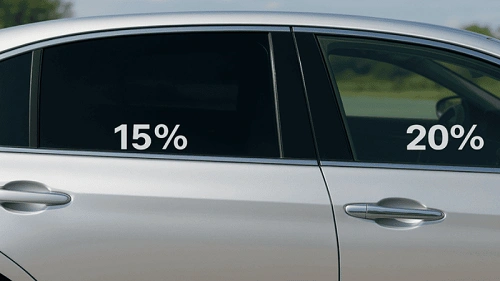
No, 15% window tint is not legal on the front windows of passenger vehicles in California. Many drivers assume that because darker tint is common in other states, it must be allowed in California too. But the state has one of the strictest window-tint laws in the country. While some level of tint is allowed on front side windows, it must let in a significant amount of light. A 15% tint is far too dark to meet that requirement. The law prioritizes visibility for law enforcement and driver safety, which means California only permits relatively light tint on front windows. So, although 15% tint is popular for aesthetics and heat control, using it on your front windows will violate state law and can lead to tickets, mandatory removal, and repeat fines.
What California Law Allows on Car Window Tint
California Vehicle Code § 26708 regulates how dark window tint can be on specific windows. Instead of banning tint completely, the state sets minimum visible light transmission (VLT) limits — meaning how much light must pass through the glass.
For front side windows, California requires:
- The tint must allow 70% or more light to pass through.
A 15% tint only allows 15% light through, which is far below the required 70% and therefore illegal on the front driver and passenger windows.
Where 15% Tint Can Be Used Legally
Although 15% is too dark for the front windows, California does allow darker tint on rear windows under certain conditions:
- Back side windows (rear passenger windows) can be tinted as dark as you want, even 5% (“limo tint”).
- Rear windshield can also be tinted to any darkness as long as you have dual side mirrors.
This means 15% tint is legal only for the back side windows and rear windshield with proper mirrors installed. On the front, it remains prohibited no matter what type of vehicle you drive.
Why California Restricts Dark Tint on the Front Windows
The 70% rule is not just about aesthetics. California’s regulations are based on two main safety priorities:
1. Visibility for the Driver
Dark tint can make it harder to see pedestrians, cyclists, and vehicles at night or during bad weather, increasing the risk of accidents.
2. Visibility for Law Enforcement
Officers must be able to see inside a vehicle during traffic stops for safety reasons. Extremely dark tint prevents them from seeing the driver’s hands and the interior of the car, which the state considers a safety threat.
These reasons are why California remains stricter than most states when it comes to tinting the front windows.
What Happens If You Use 15% Tint on the Front Windows?
If you install 15% tint where it’s not allowed, police can cite you. Penalties typically include:
- A “fix-it ticket,” requiring removal of the illegal tint.
- A fine if you fail to correct the issue.
- Additional fines for repeated violations.
- Multiple citations can cost more than professional removal and legal replacement tint. Insurance
companies may also question illegally modified vehicles after accidents, especially when vision is a factor.
Medical Exemptions: Can You Get Permission for 15% Tint?
Yes, but not automatically. California allows individuals with specific medical conditions to apply for a tint exemption. Conditions typically involve light sensitivity or medical needs requiring UV protection. However, even with an exemption, the tint must still meet safety guidelines and cannot be fully opaque or mirrored. A doctor’s note alone is not enough; formal DMV documentation is required to make the tint legal.
Conclusion
In California, 15% tint is illegal on the front side windows of any passenger vehicle because it violates the state’s minimum light-transmission requirement of 70%. You can use 15% legally only on your rear windows and rear windshield, provided your vehicle has dual mirrors. While the tint might offer privacy and style, using it on the front windows can result in fines, ticket repairs, and safety issues. If you want a legal look without hassles, stick to lighter tint for the front and save the darker film for the rear.